Daniel stared at me.
Then he laughed.
Not because it was funny.
Because sometimes the mind rejects a sentence before it understands it.
“What?”
Behind me, Eleanor sat down heavily.
Daniel looked at his mother.
“Mom?”
She said nothing.
His eyes came back to me.
“What are you talking about?”
I handed him Margaret’s last letter.
He did not take it.
“Jennifer.”
“Read it.”
“What is this?”
“Margaret wrote it three days before she died.”
His face tightened.
“You went through Aunt Margaret’s things?”
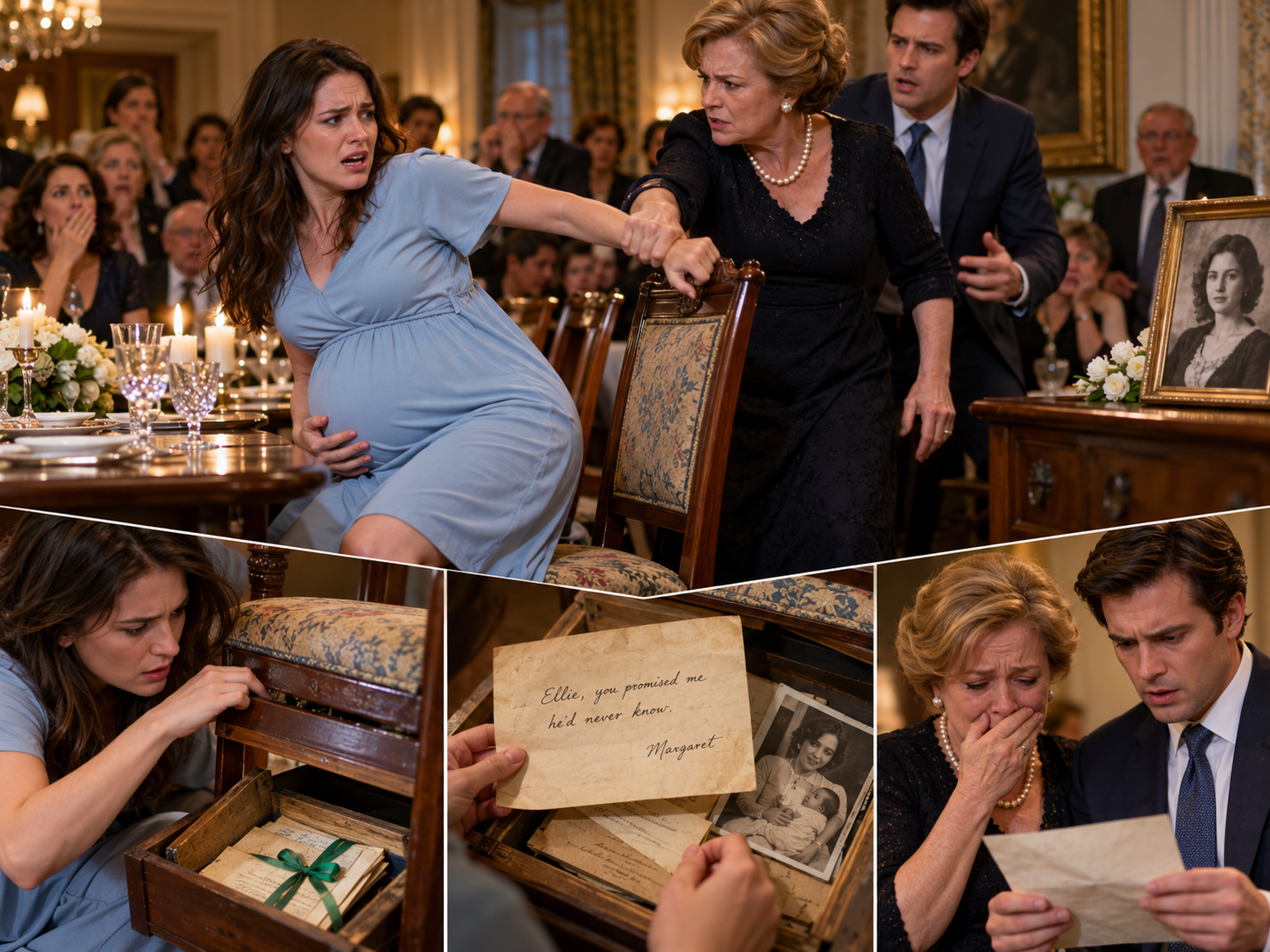
“I found letters hidden in the chair.”
He turned toward Eleanor.
“Mom?”
Still nothing.
Finally he took the letter.
I watched his eyes move across the page.
At first confusion.
Then disbelief.
Then something deeper.
He read it twice.
“Samuel?”
Eleanor made a small sound.
Daniel looked at her.
“Who is Samuel?”
She pressed both hands together.
“Your aunt’s son.”
I watched my husband absorb the fact that a person he had never heard of had suddenly become part of his family.
“How?”
The question sounded almost childish.
Eleanor's voice broke.
“Margaret became pregnant when she was twenty-six.”
“And had a baby?”
“Yes.”
“And nobody told me?”
“You were four.”
“I’m fifty now.”
Eleanor looked away.
The math hurt him.
I could see it.
Forty-six years.
Not a forgotten detail.
A deliberate absence.
“Dad doesn’t know?”
“No.”
“Grandma and Grandpa?”
“They knew Margaret went away. I don’t know how much they suspected.”
“Who was the father?”
“A man named Thomas.”
“Thomas what?”
“That doesn't matter now.”
Daniel slammed the letter down on the sewing table.
“Stop deciding what matters.”
I flinched.
I had rarely heard him raise his voice at his mother.
Eleanor did too.
He stared at her.
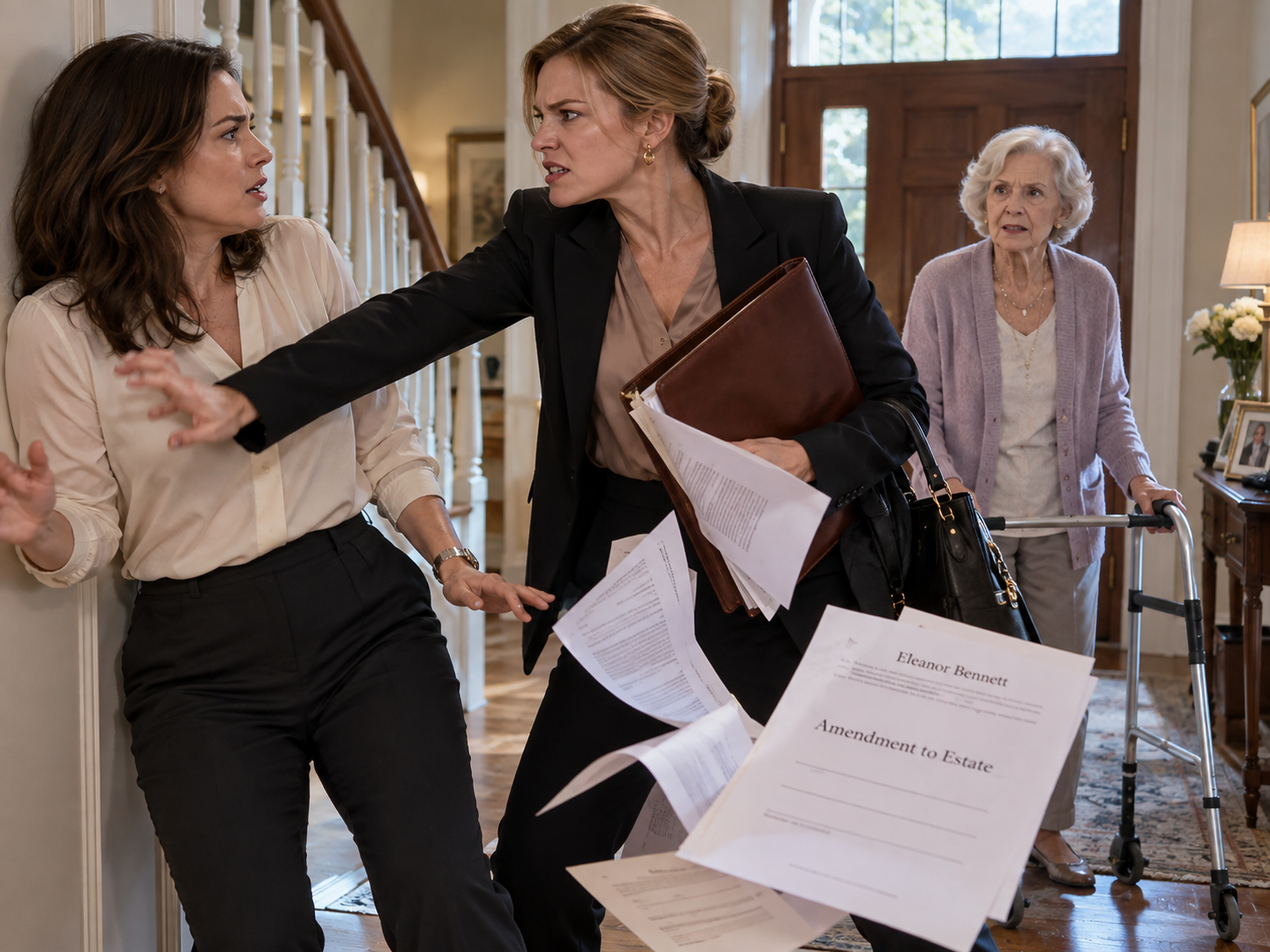
“You dragged my pregnant wife out of a chair last night because you were afraid she would find these?”
“I did not intend for her to fall.”
“That is not what I asked.”
“Daniel—”
“Was that why?”
“Yes.”
He stepped back.
His face was red.
I should have felt vindicated.
Instead I felt sad.
Because the apology I had wanted was finally coming toward me, but it had taken a dead woman and a hidden child to make my husband understand.
Daniel looked at me.
“I’m sorry.”
I swallowed.
“We’ll talk about us later.”
He nodded.
Then he turned back to Eleanor.
“What happened to Samuel?”
“I don’t know.”
That answer seemed to stun him even more.
“You don't know?”
“No.”
“Was he adopted?”
“Yes.”
“By whom?”
“I never knew their names.”
“Did Aunt Margaret?”
“Not officially.”
“What does that mean?”
“She learned some details through the agency. She believed he stayed in Connecticut. She tried to establish a way for him to contact her someday.”
“And you stopped her.”
“I tried to.”
Daniel picked up another letter.
Then another.
His hands were shaking.
“What did she ask you to do?”
Eleanor looked toward me.
I wished she wouldn't.
This truth needed to come from her.
So I said, “Tell him.”
Her shoulders dropped.
“She wanted me to make sure Samuel could someday know who she was.”
“Did you?”
“No.”
Daniel closed his eyes.
“Jesus Christ.”
“She died before she could finish the process.”
“And you did nothing.”
“I was afraid.”
“For forty years?”
Her voice rose.
“You think fear expires?”
“No,” he said. “But children grow up.”
Silence.
That sentence changed the room.
Samuel was no longer an infant in an old photograph that didn't exist.
He had grown.
Somewhere.
Without them.
If he was alive, he was forty-six years old.
He might have children.
A spouse.
A mortgage.
Gray hair beginning at his temples.
He might have spent his entire life wondering where he came from.
Or perhaps he had never wondered at all.
We didn’t know.
That was the cruelty of secrets.
They freeze people at the moment you stop speaking about them.
But the people themselves keep living.
The front door opened downstairs.
Robert called Eleanor’s name.
She stood abruptly.
“No.”
Daniel looked at her.
“No what?”
“Not your father.”
“He deserves to know.”
“Daniel, please.”
“Why? Because he’ll look at you differently?”
Her eyes filled.
“You think this is easy for me?”
He stared at her.
“No. I think you’ve spent forty-six years making sure it was easier for you than it was for Margaret.”
The words hit hard.
Eleanor recoiled.
I touched Daniel’s arm.
Not to silence him.
To remind him she was still his mother.
He breathed out.
Robert called again.
“Ellie?”
The nickname.
The one Margaret used in the letters.
Eleanor went pale.
She looked toward the hallway like the past itself was walking toward her.
Then Robert appeared in the doorway.
He smiled first.
“What are all of you doing in here?”
No one answered.
His smile faded.
He saw the letters.
The chair.
Eleanor’s face.
“What happened?”
Daniel looked at his mother.
“Tell him.”
Eleanor whispered, “Not now.”
Robert frowned.
“Tell me what?”
Daniel crossed his arms.
“You said nobody else gets to decide anymore.”
Eleanor looked at me.
Then at her son.
Finally at her husband.
“Robert,” she said, “before you and I were married… Margaret had a child.”
Robert blinked.
“I’m sorry?”
“A boy.”
He stared at her.
I saw the exact second he understood that this was not a story about someone else.
“A child?”
“Yes.”
“You knew?”
“Yes.”
“How long?”
She looked down.
“From the beginning.”
Robert walked into the room and shut the door.
The movement was calm.
Too calm.
“Tell me.”
So she did.
Not everything.
Not at first.
But once the story began, it seemed to pull itself out of her.
Margaret and Thomas.
The pregnancy.
The months away.
The birth.
The adoption.
Margaret’s regret.
The agency.
The letters.
The car accident.
The promise.
Robert listened without interrupting.
When Eleanor finally stopped, the silence was unbearable.
He sat beside the sewing machine.
“You told me she went away because your aunt was sick.”
“Yes.”
“She wasn’t?”
“She had arthritis. Margaret stayed with her for part of the time, but that wasn’t why she left.”
“You told me Margaret was depressed after the accident because she had never built a family of her own.”
Eleanor covered her mouth.
Robert stared at her.
“All these years I thought that was why you left a chair empty for her.”
“In a way, it was.”
“No.”
His voice remained quiet.
“That is not the same thing.”
Eleanor began to cry.
Not elegantly.
Not discreetly.
Her shoulders shook.
I had never seen her cry before.
“I missed her,” she said.
Robert looked away.
“I know.”
“I missed her every day.”
“I know.”
“I thought if I said it out loud, then the ugliest thing I had ever done would become real.”
Robert’s eyes returned to her.
“Eleanor. It was real.”
She closed her eyes.
He stood and walked toward the chair.
His fingers touched the carved back.
“How many dinners?”
She did not answer.
He gave a bitter smile.
“How many Christmases did we sit around this table while you guarded this thing?”
“Robert—”
“I thought it was grief.”
“It was.”
“It was guilt.”
“It was both.”
He nodded.
That, at least, he seemed to believe.
Then his gaze moved toward me.
“Jennifer, are you all right?”
The question surprised me.
I touched my side.
“I’m sore.”
Daniel stiffened.
Robert looked at Eleanor.
“What happened?”
Eleanor wiped her face.
“Last night…”
“She pulled me out of the chair.”
Robert's expression changed.
“You did what?”
“I panicked.”
“She hit the table,” Daniel said.
“I said I was sorry.”
I looked at her.
“No. You haven't.”
She froze.
It was a small distinction.
But an important one.
She had explained.
She had cried.
She had admitted fear.
She had not apologized.
Eleanor looked at my bruised wrist.
Then at my stomach.
And perhaps for the first time she saw the scene not from inside her panic, but from outside it.
She stood.
“Jennifer.”
I waited.
“I am sorry.”
Her voice shook.
“For grabbing you. For humiliating you. For frightening you. For risking your safety because I was afraid of my own secret.”
My anger did not vanish.
An apology is not a magic trick.
But something unclenched inside me.
“Thank you.”
Daniel put a hand on my back.
I stepped away from it.
He noticed.
Good.
We were not finished either.
Robert opened one of Margaret’s letters.
“Does anyone know where the boy is?”
“No,” Eleanor said.
Robert looked at her.
“Then that is what we find out.”
Her head lifted sharply.
“What?”
“We find out what happened.”
“Robert, he may not want—”
“We don't force anything.”
He spoke firmly.
“But we stop hiding.”
Eleanor looked terrified again.
Only this time no one rushed to protect her from the feeling.
Daniel gathered the letters carefully.
There was something almost ceremonial in the way he retied the green ribbon.
Then a voice called from downstairs.
One of the cousins.
“Lunch is here!”
Twenty relatives were about to return to the house.
For a strange second, nobody moved.
Then Robert looked at Eleanor.
“We're not announcing this over sandwiches.”
Daniel almost laughed.
So did I.
It broke the pressure.
Barely.
Robert opened the door.
Before leaving, Eleanor turned back to the chair.
Her hand rested on it.
I thought she might close the compartment.
Instead, she left it open.
That afternoon, she moved the chair back into the dining room.
But this time, it was not placed at the table.
It stood against the wall.
No one sat in it.
Not because Eleanor forbade them.
Because the chair was no longer a throne for the dead.
It was evidence.
And the secret beneath its seat had already escaped.