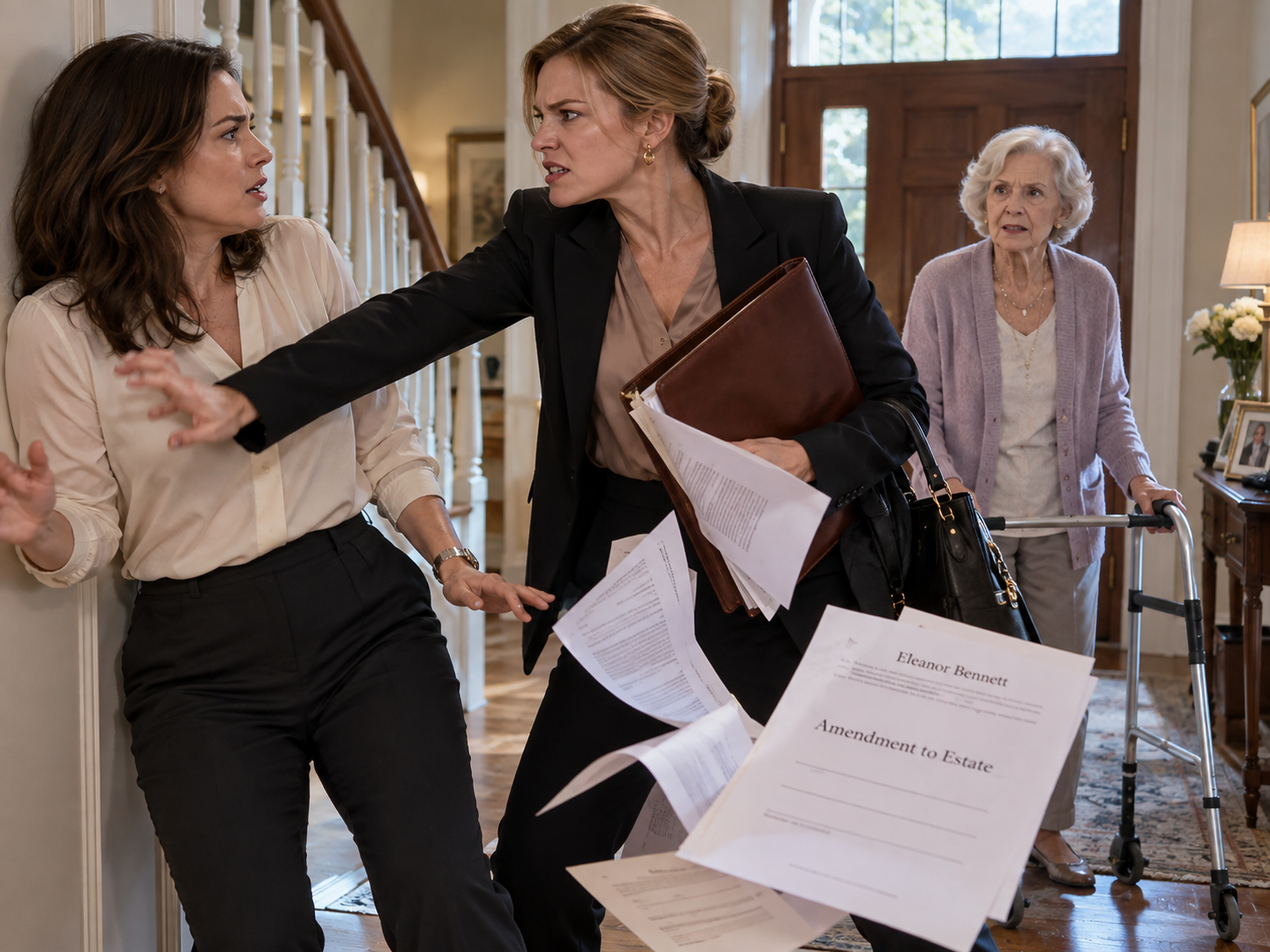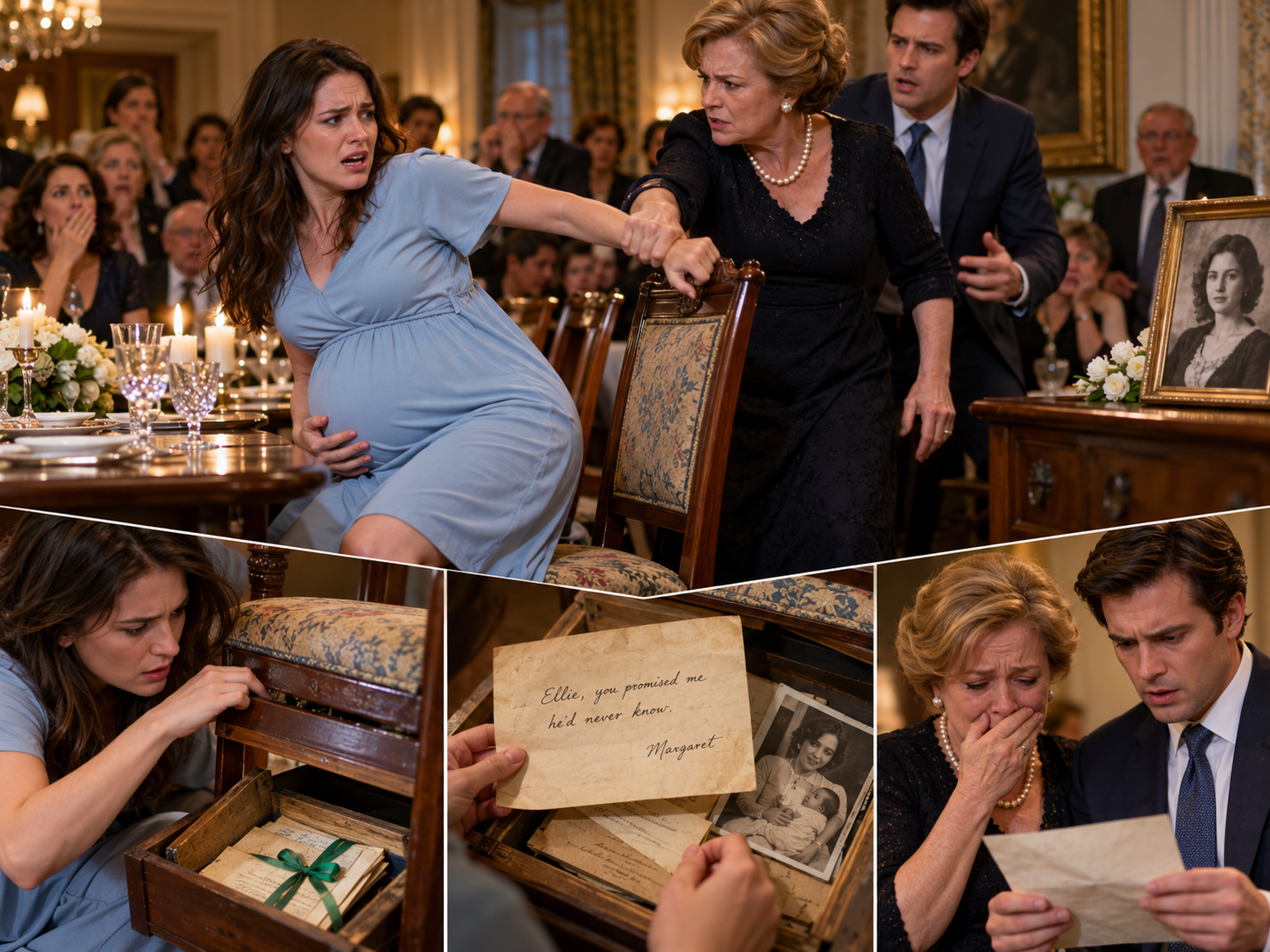
The door opened inward.
Eleanor saw me.
Then she saw the letter in my hand.
Everything in her face disappeared.
Anger.
Pride.
Control.
For one second she looked simply old.
“You opened it,” she whispered.
I straightened.
“Yes.”
She shut the door behind herself.
“You had no right.”
“I know.”
That surprised her.
I continued.
“I know I shouldn’t have come in here. I know these letters weren’t written to me. But after last night, after the way you reacted, after finding that torn note under the door, I needed to understand what could possibly make you treat me that way.”
“You needed to understand?”
Her voice sharpened.
“So you invaded my sister’s private life?”
“You were hiding it.”
“It was none of your business.”
“Maybe it wasn’t.”
I held up the letter.
“But you made it my business when you put your hands on me to protect it.”
She moved toward me.
“Give me that.”
I stepped back.
“No.”
“Jennifer.”
“No.”
Her eyes flashed.
“You have no idea what you are holding.”
“I know Margaret had a son.”
Her face collapsed.
It happened so quickly I almost regretted saying it.
She reached blindly for the back of the chair and sat down.
The same chair she had forbidden anyone else to touch.
For a long moment, neither of us spoke.
Then she said, “You read all of them?”
“Enough.”
She looked at the floor.
“Where is Daniel?”
“Outside.”
“Does he know?”
“No.”
Her eyes lifted.
“What did you tell him?”
“Nothing yet.”
Relief crossed her face.
That angered me.
“Don’t look relieved.”
She stared at me.
“You cannot tell him.”
I actually laughed.
A short, stunned sound.
“You think after everything I just read, your main concern should be whether Daniel finds out?”
“You don’t understand what this will do.”
“To whom?”
“To this family.”
There it was.
The same language Margaret had written about forty years earlier.
Family.
Reputation.
Damage.
As if truth itself were the threat.
I said, “You told Margaret not to contact her own child.”
“I told her to think.”
“You told her to disappear for half a year, give birth in secret, and come home pretending nothing happened.”
“You weren’t there.”
“No.”
“You don't know our father.”
“No.”
“You don't know what the world was like then.”
“No.”
Each answer made her more agitated.
Finally I said, “But I know what the letters say.”
Eleanor stood.
“The letters say what Margaret felt. They do not say everything.”
“Then tell me everything.”
She looked toward the window.
Outside, Daniel laughed at something.
The sound was faint.
Eleanor closed her eyes.
“Margaret was always the brave one.”
I waited.
“She called it bravery. I called it carelessness. She did everything first. First to cut her hair short. First to move into an apartment without asking permission. First to date someone Daddy disliked.”
“Thomas.”
Her jaw tightened.
“Yes.”
“Who was he?”
“It doesn’t matter.”
“It mattered to Margaret.”
“He was older. He was married.”
“Margaret said he was separated.”
“He said he was separated.”
There was bitterness in her voice.
“He had a wife. A daughter. A life. And my sister believed every promise he made because she wanted to believe him.”
“Did he know about the baby?”
“No.”
“Why?”
“She refused to tell him at first. Then by the time she wanted to, he had gone back to his wife.”
I looked down at the letter.
“So Samuel was placed for adoption.”
“Yes.”
“Did Margaret want that?”
Eleanor’s voice softened.
“At first, she didn’t know what she wanted.”
“That’s not an answer.”
“No,” she said quietly. “She didn’t.”
The room seemed to shrink around us.
“You pressured her.”
“My parents would have destroyed her.”
“So you did it first?”
Her head snapped toward me.
“You think I wanted that?”
“I think Margaret believed you chose the family’s reputation over her.”
Eleanor’s face twisted.
“You read a dead woman’s anger and decided it was the whole truth.”
“Then give me yours.”
She stared at the chair.
“When she told me she was pregnant, I was twenty-five. Newly married. Terrified of my father. Terrified for her. We had no internet. No anonymous support groups. No way to hide in a crowd. Everyone knew everyone. An unmarried woman carrying a married man’s child—”
She stopped.
Her hand trembled.
“You think shame is cruel now. You should have seen how efficiently it could destroy a woman then.”
For the first time, I heard something besides defensiveness.