Stories worth slowing down for — new every evening
THE CHAIR NO ONE WAS ALLOWED TO SIT IN

Part 3: THE LETTERS UNDER THE SEAT

THE LETTERS UNDER THE SEAT

I read the sentence twelve times.

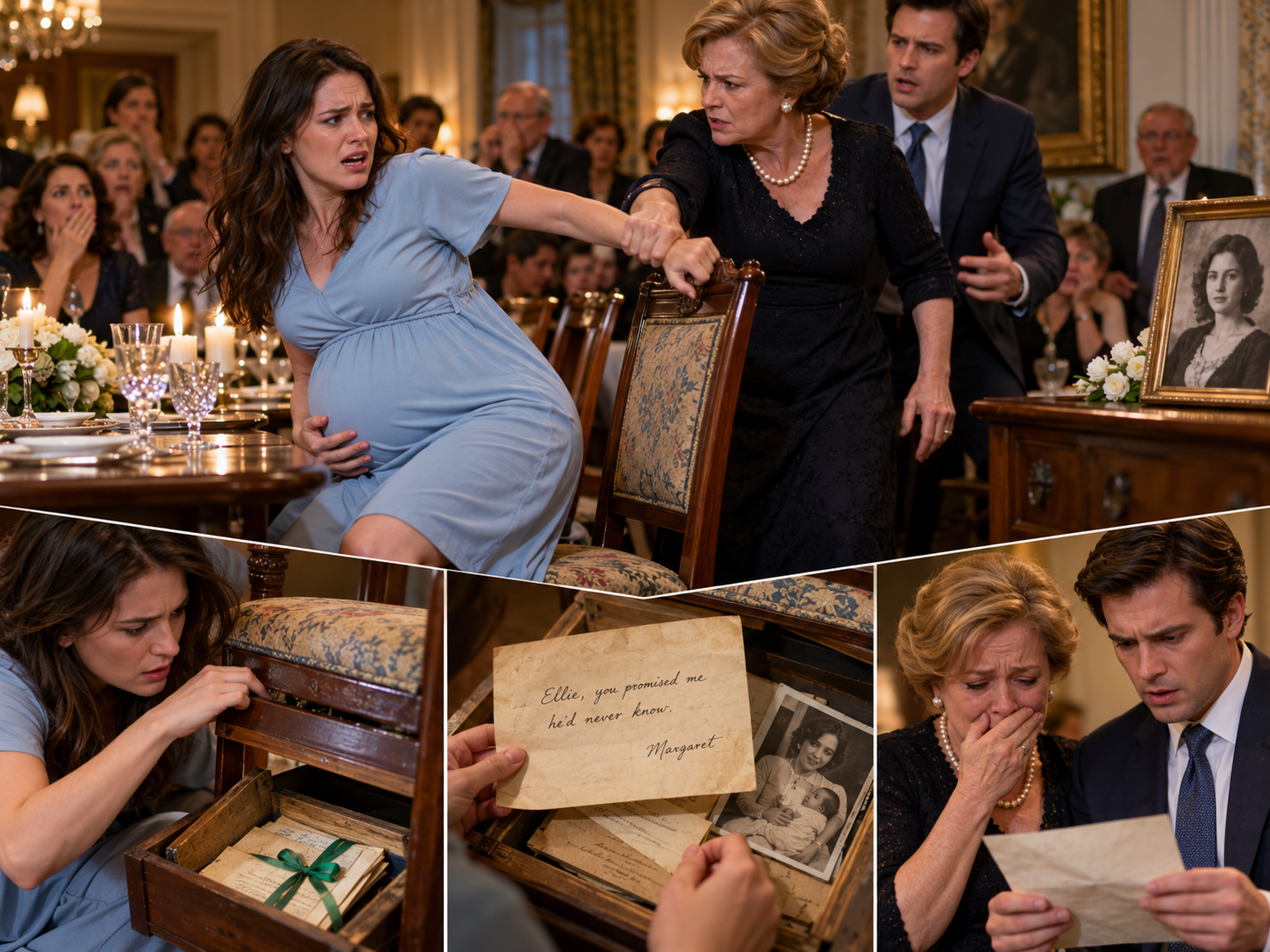
Ellie, you promised me he’d never know.

There are moments when your body understands danger before your mind does.

My palms started sweating.

My heartbeat grew heavy.

The hallway seemed unnaturally quiet.

I turned the paper over.

Nothing.

Only the fragment.

It had clearly been torn from something larger.

I heard laughter outside through the kitchen window.

Daniel and his cousin.

Normal life.

Ten yards away.

I slipped the paper into the pocket of my cardigan.

Then I stood in front of the sewing room door and did something I would have judged another person for doing.

I tried the handle again.

Locked.

I searched above the doorframe.

Nothing.

I checked the small ceramic bowl on a side table.

Buttons.

A thimble.

Two keys.

The first key belonged to something tiny.

The second fit the lock.

I wish I could say I hesitated longer.

I didn't.

The door opened.

The room smelled of lavender sachets and old cloth.

Eleanor’s sewing machine sat beneath the window.

Shelves of folded fabric lined one wall.

And in the center of the room, completely out of place, stood Margaret’s chair.

Eleanor had covered it with a white sheet.

I shut the door behind me.

Then I pulled the sheet away.

In daylight, I could see details I had missed the night before.

The chair was older than the other dining chairs.

The wood had been refinished.

The upholstery had been replaced.

But under the seat, the small brass latch remained.

I crouched.

My pregnancy made the position awkward, and I had to brace one hand against the floor.

The latch moved easily.

A narrow wooden panel dropped open.

Inside was a bundle wrapped in faded green ribbon.

Letters.

Dozens of them.

My breath stopped.

I took out the bundle.

Some envelopes were addressed to Margaret Bennett.

Others to Eleanor.

Several had never been stamped.

The dates ran from 1979 through 1986.

I untied the ribbon.

The first letter I opened began:

Dear Ellie,

I know you think I have lost my mind.

I sat on the floor.

The letter shook in my hands.

Margaret wrote about a man.

Not by full name.

Only Thomas.

She wrote that Eleanor hated him because he was married when Margaret first met him.

Margaret insisted the marriage was already ending.

Eleanor apparently did not believe her.

The next letter was dated four months later.

Margaret was pregnant.

I stopped reading.

My free hand moved automatically to my stomach.

There was no ambiguity.

No poetic language.

No metaphor.

I went to Dr. Lawson this morning. I am eleven weeks. I haven’t told Thomas. I don’t know if I can.

I stared at the page.

Daniel had never mentioned Margaret having children.

Neither had anyone else.

I opened another letter.

Margaret was frightened.

Their parents were strict.

Her father had told both daughters that “a woman’s reputation is the only inheritance no one can restore once it is spent.”

Margaret had hidden the pregnancy beneath loose dresses.

Eleanor had helped.

There were references to doctor appointments in another town.

Money withdrawn secretly.

Arguments.

Promises.

Then I found a letter in Eleanor’s handwriting.

Meg, listen to me. You cannot bring a baby home. Daddy will throw you out. Mother will collapse. Thomas has not chosen you. You have to think beyond what you want today.

It was strange seeing my mother-in-law’s voice at twenty-something.

The handwriting looked younger somehow.

But the certainty was identical.

I kept reading.

Margaret had gone away for several months.

The family was told she was helping an aunt after surgery.

She gave birth to a boy.

A son.
My throat tightened.

There was no name at first.

Only the baby.

Then, three letters later:

I called him Samuel in the hospital.

I closed my eyes.

Somewhere in 1980, Margaret Bennett had held a newborn son nobody in her family was supposed to know existed.

I opened the next letter.

The child had been placed with another family.

Margaret regretted it almost immediately.

She begged Eleanor to help her find him.

Eleanor refused.

Not cruelly, at least not in the beginning.

Her letters were terrified.

You cannot undo this without destroying everything.

Thomas still doesn’t know.

Daddy suspects something.

Please, Meg, let the boy have a stable life.

Then Margaret’s replies grew angrier.

You keep calling it stability because that sounds better than shame.

Another:

He is my son whether anyone approves or not.

And another:

Sometimes I think you are more afraid of people whispering about us than you are of what this is doing to me.

I sat very still.

The house no longer felt quiet.

It felt full of voices.

Dead ones.

Young ones.

Women arguing in ink across forty-six years.

Then I found a letter dated September 1986.

Six years after Samuel’s birth.

The handwriting was uneven.

Ellie, I found the agency.

I reread it.

Margaret had discovered which adoption organization had handled the placement.

She believed she could leave a letter for Samuel to receive when he became an adult.

She wanted him to know she had not abandoned him because she did not love him.

She wanted him to know her name.

She wanted him to know he had family.

The next letter was Eleanor’s.

Only half a page.

Do not do this.

You will reopen something that cannot be repaired.

Robert knows nothing. The children know nothing. Thomas knows nothing.

If you contact the agency, you may bring all of this back into our lives.

I froze.

Robert knows nothing.

The children know nothing.

Daniel would have been a child then.

I searched through the remaining letters.

A month later, Margaret wrote:

I’m going anyway.

Then:

You cannot stop me.

And finally:

I kept copies because I know you, Ellie. You erase anything that frightens you.

That line made my skin prickle.

I looked at the hidden compartment.

This was why Eleanor had panicked.

Not because the chair was sacred.

Because Margaret had used it as a vault.

I found the final envelope.

It was dated three days before Margaret died.

There was no stamp.

It was addressed to Eleanor.

I opened it.

The first lines were enough to make me forget to breathe.

Ellie, if anything happens before I reach him, you have to tell Samuel the truth.

You are the only person left who knows where the records lead.

I heard the front door open.

Voices filled the hallway.

Eleanor was home.

I grabbed the letters.

The ribbon fell to the floor.

Footsteps approached.

“Jennifer?”

I shoved the letters back into the compartment, but one envelope caught against the hinge.

The doorknob turned.

Locked.

A pause.

Then Eleanor tried it again.

“Jennifer?”

I stood.

Every instinct told me to pretend I wasn't there.

Then the shadow beneath the door stopped moving.

I could hear her breathing.

“Open this door.”

Her voice had changed.

I looked down.

The green ribbon was still lying beside my shoe.

The torn fragment was in my pocket.

And one letter—the last letter—was still in my hand.

“Jennifer.”

I didn't answer.

Her key entered the lock.