PART FOUR — THE DOCTOR’S CONFESSION
Everyone stared at Dr. Samuel Morris.
Charles had known him for nineteen years.
They had played golf together.
Their wives had exchanged Christmas cards.
Samuel had sat beside Charles in a hospital waiting room when Richard underwent his final surgery.
Now the physician looked older than Charles had ever seen him.
“You called the police?” Charles asked.
“Yes.”
“Because of the glass?”
“No.”
Samuel reached into his jacket.
Martin immediately stepped forward.
“Hands where I can see them.”
Samuel stopped.
“It’s only an envelope.”
“Take it out slowly.”
He did.
He placed it on the desk.
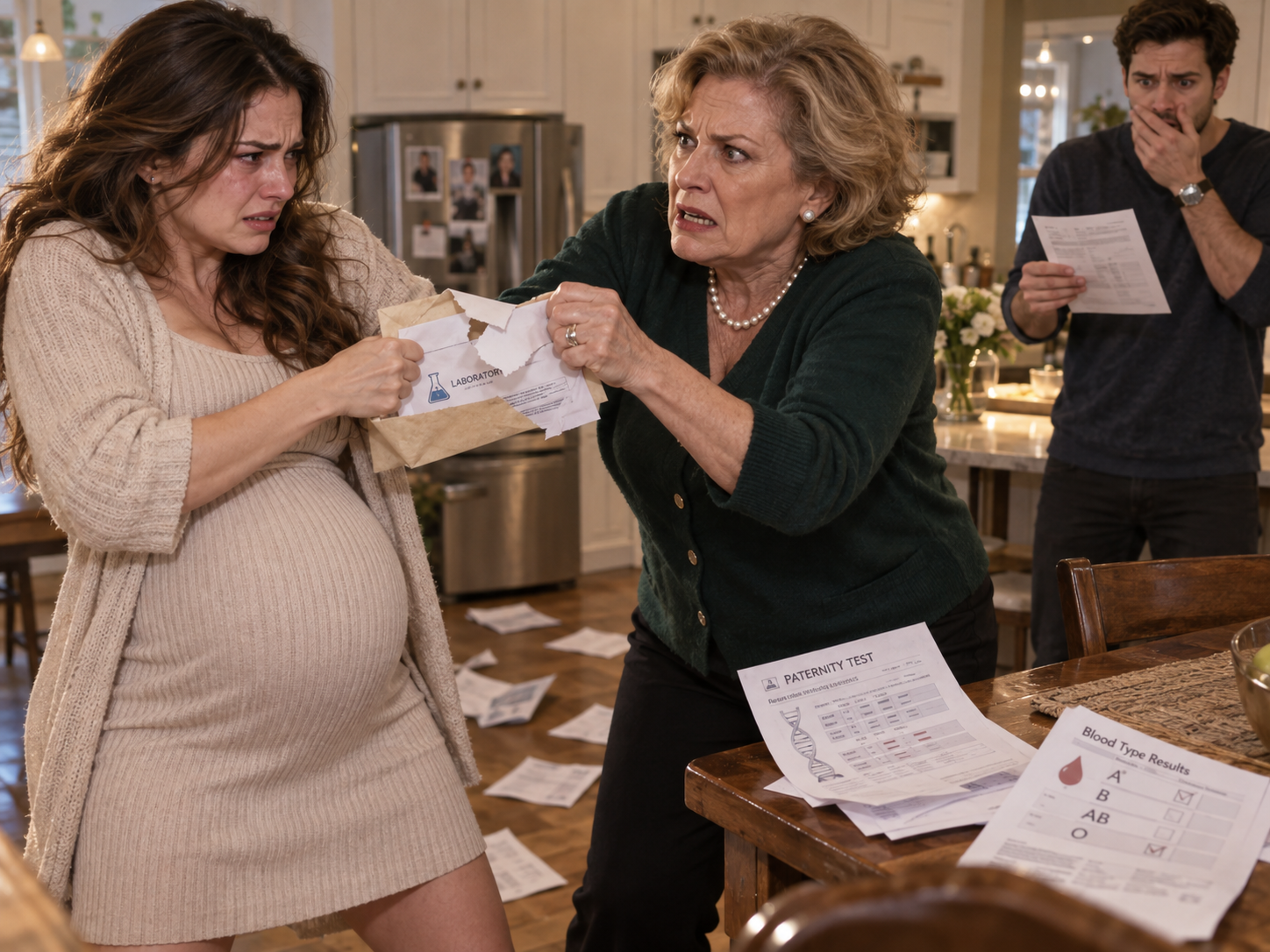
“This is why.”
Charles opened it.
Inside were laboratory reports.
He did not understand most of the terminology, but one phrase appeared repeatedly.
**Elevated sedative concentration.**
He looked up.
“What is this?”
“Blood tests.”
“Whose?”
“Yours.”
Victoria stood.
“I only gave him what you prescribed.”
Samuel looked at her.
“No, Victoria.”
Her face changed.
“The medication I prescribed would not produce these levels.”
Charles felt cold.
Samuel continued.
“Your symptoms began approximately eight months ago. Confusion. Memory loss. Mood instability. Fatigue. I initially believed we were looking at vascular dementia.”
“You told us his scans confirmed it,” Catherine said.
“They showed minor vascular changes common in people his age.”
Charles stared.
“Are you saying I don’t have dementia?”
Samuel’s eyes filled with shame.
“I’m saying I no longer believe that explains what has been happening.”
Silence.
Charles gripped the desk.
“What does?”
“Someone has been giving you sedatives.”
Victoria shook her head.
“No.”
“Repeated low doses can cause confusion, memory problems, poor coordination, personality changes.”
Catherine whispered, “For how long?”
“Possibly months.”
Charles slowly sat.
The world suddenly became sharper.
Terrifyingly sharper.
His forgotten conversations.
The signatures.
His fatigue.
His confusion.
Someone had not merely taken advantage of his decline.
Someone may have created it.
“Who?” Charles whispered.
Samuel shook his head.
“I don’t know.”
Victoria pointed toward Anna.
“She could have done it.”
Anna stared at her.
“I met him tonight.”
“You claim that.”
Charles raised a hand.
“Enough.”
He turned toward Samuel.
“Why did you wait?”
Samuel looked ashamed.
“Because I thought I had made a terrible diagnostic error.”
“That isn’t an answer.”
“I kept testing you.”
“And?”
“The levels dropped whenever you traveled.”
Charles frowned.
“What?”
“Three months ago, you spent ten days at your cabin in Montana. Your bloodwork improved.”
Catherine whispered, “Because he wasn’t home.”
Samuel nodded.
“Then he returned, and the levels rose again.”
Charles looked around the room.
Everyone who had regular access to his house stood before him.
Catherine.
Victoria.
Martin.
Staff.
Samuel himself.
“Who prepares my meals?”
“Your kitchen staff,” Martin said.
“My coffee?”
“Usually Mrs. Bell.”
“My medication?”
Catherine answered.
“I organize the weekly container.”
Charles looked at her.
She went pale.
“Dad, no.”
“Who else touches it?”
“I don’t know.”
Victoria suddenly laughed.
The sound was bitter.
“This is unbelievable. We’re all accusing each other while the person responsible could be anywhere.”
Anna looked toward the door.
“Not anywhere.”
Everyone turned.
She walked toward the fireplace.
“Richard once told me something about this house.”
Charles stared.
“When?”
“Years ago.”
She pressed against a carved panel.
Nothing happened.
Then she moved her hand lower.
A narrow door clicked open.
Catherine gasped.
Charles knew the passage.
Few others did.
It had been built in the 1920s when the mansion belonged to a railroad magnate. The hidden service corridor connected several rooms.
Richard and Catherine had played inside it as children.
Victoria whispered, “What is that?”
“A servant passage,” Charles said.
Anna looked at him.
“Someone has been using it.”
She pointed to the floor.
Fresh scuff marks crossed the dust.
Martin drew his phone flashlight.
“I’ll check it.”
Charles followed.
“Sir—”
“I’m coming.”
The corridor was narrow and dark.
They moved slowly.
After approximately twenty feet, they reached a small recess behind Charles’s private study.
There, on an old shelf, sat a box.
Martin opened it.
Inside were disposable gloves.
Several small bottles.
And a prescription container bearing Charles’s name.
Samuel examined one bottle.
His face went white.
“What is it?” Charles asked.
Samuel held it up.
“A concentrated sedative.”
Victoria covered her mouth.
Martin said, “This has to be preserved for police.”
Then Anna noticed something else.
A small digital recorder.
Martin pressed play.
Static.
Then a voice.
Charles’s voice.
“I don’t want to sign anything tonight.”
Another voice answered.
Soft.
Patient.
Familiar.
“You already agreed, Dad.”
Catherine closed her eyes.
Charles turned toward her.
The recording continued.
“You’re tired,” Catherine’s voice said. “Sign here and you can go to bed.”
Charles’s voice sounded weak.
“I don’t remember this.”
“That’s okay.”
A pause.
Then pen scratching paper.
Catherine began sobbing.
“I can explain.”
Charles looked at her as though he had never seen her before.
“Were you drugging me?”
“No.”
“Were you?”
“No!”
She grabbed his arm.
“Dad, listen to me. I found the drugs weeks ago.”
Everyone froze.
Charles pulled away.
“What?”
“I found the bottles.”
“Then why didn’t you tell anyone?”
“Because I thought Victoria was doing it.”
Victoria stepped forward.
“You what?”
“You kept pushing medication on him!”
“Because the doctor prescribed it!”
Catherine looked at Charles.
“I began changing the trust because I was afraid you would die before we discovered who was doing this.”
“So you gave yourself control?”
“I needed the authority to freeze the accounts.”
“You forged my decisions.”
“To protect you!”
Charles stared at her.
Once, when Catherine was eight, she had fallen from a horse. He remembered carrying her almost half a mile because she would not let anyone else touch her.
Now he could not tell whether the woman before him was saving him or stealing from him.
A police officer called from the library.
Martin stepped out to respond.
Anna remained beside Charles.
Then she picked up one of the bottles.
Something was taped underneath.
A tiny plastic memory card.
“Martin,” she called.
He returned.
Anna handed it to him.
Police eventually connected the card to Charles’s study computer.
The files contained months of hidden-camera footage.
Someone had recorded Charles sleeping.
Eating.
Taking pills.
Signing papers.
Arguing with family.
Someone had documented his deterioration with meticulous patience.
The final video had been recorded only two nights earlier.
Charles appeared in his study.
He was alone.
Then someone entered.
The camera angle showed only the person’s back.
Older.
Male.
Silver hair.
Charles stared at the screen.
The man turned.
Nobody spoke.
Because the person secretly entering Charles Whitmore’s study was Dr. Samuel Morris.
---