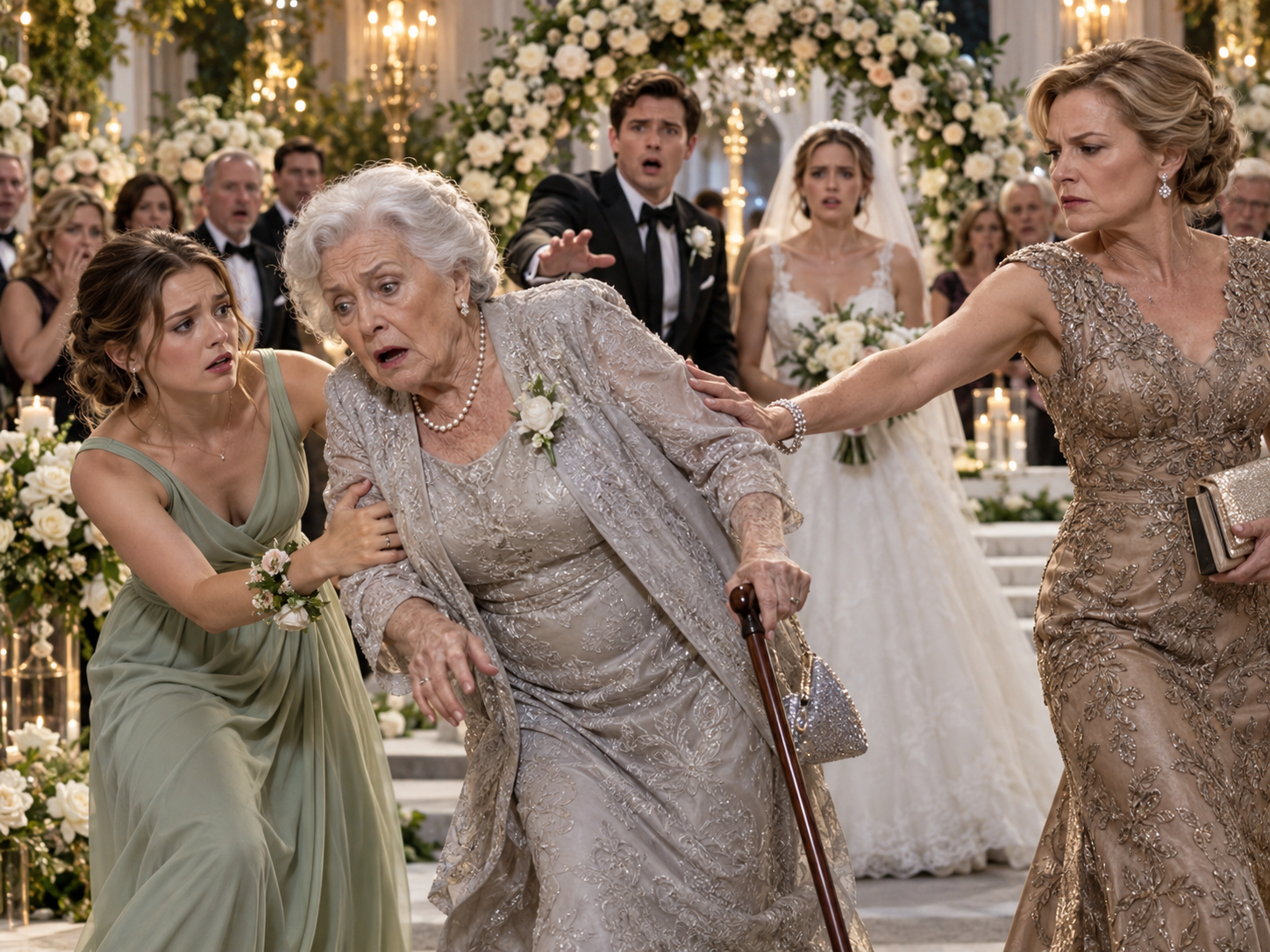
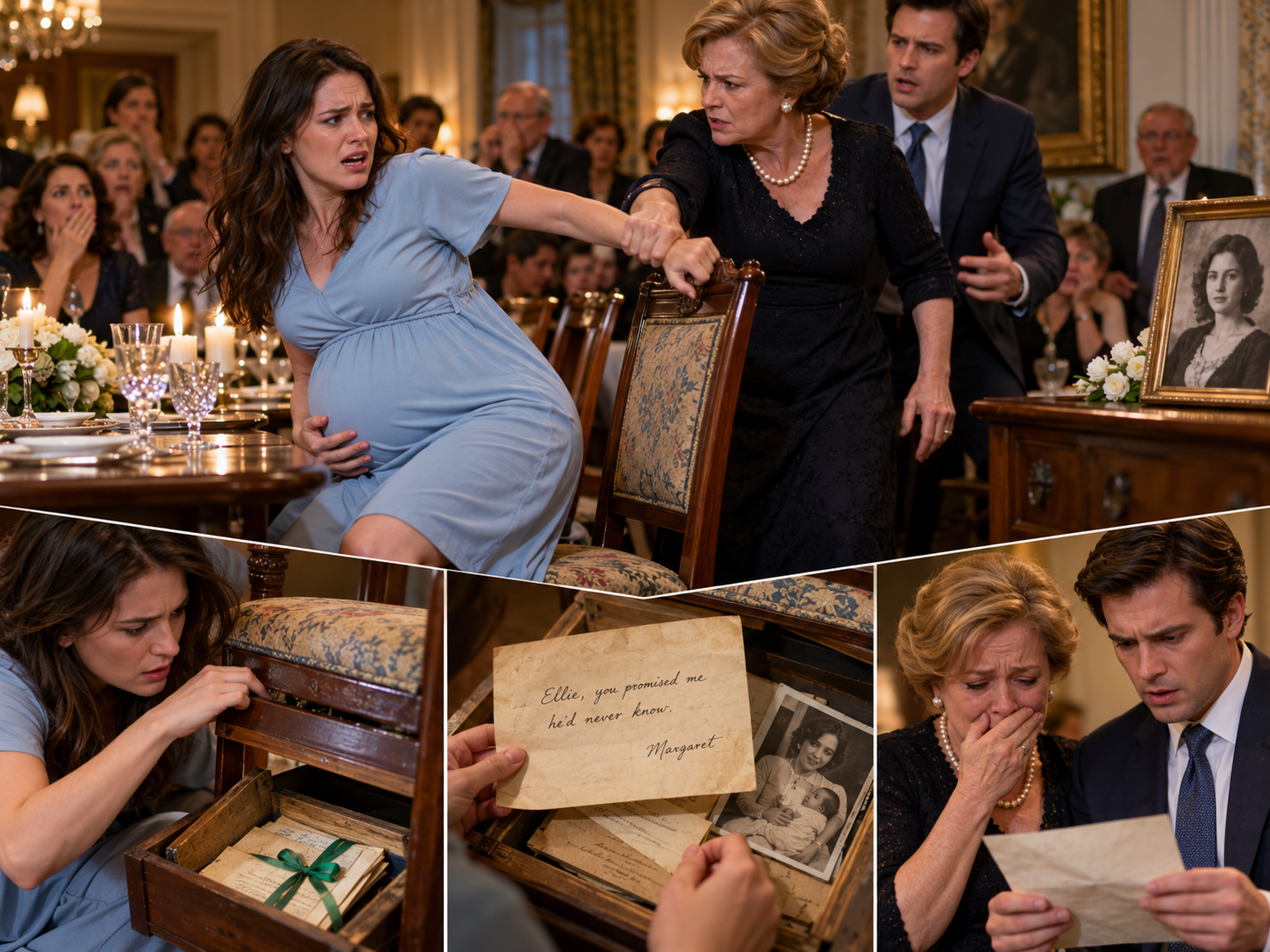
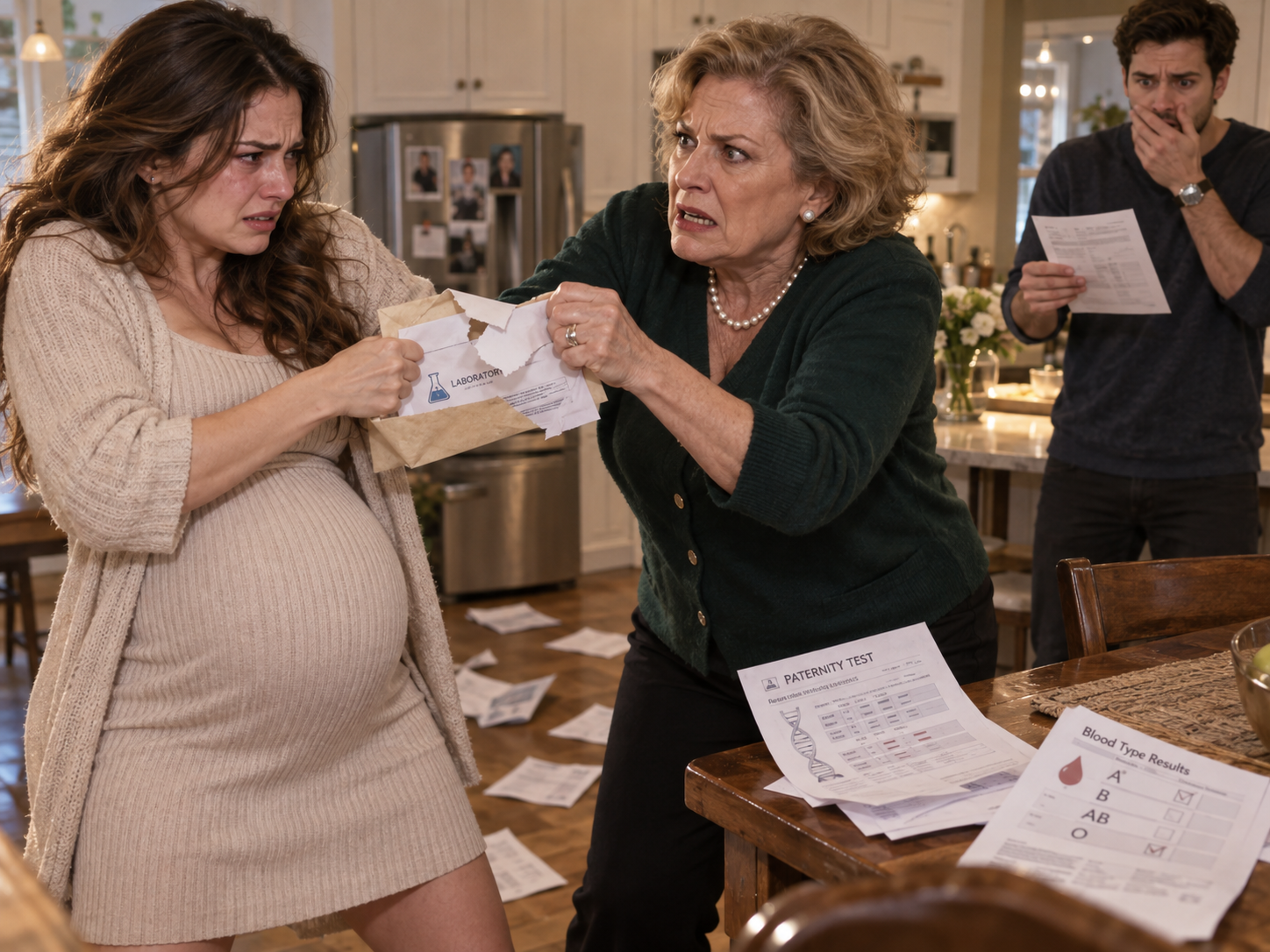
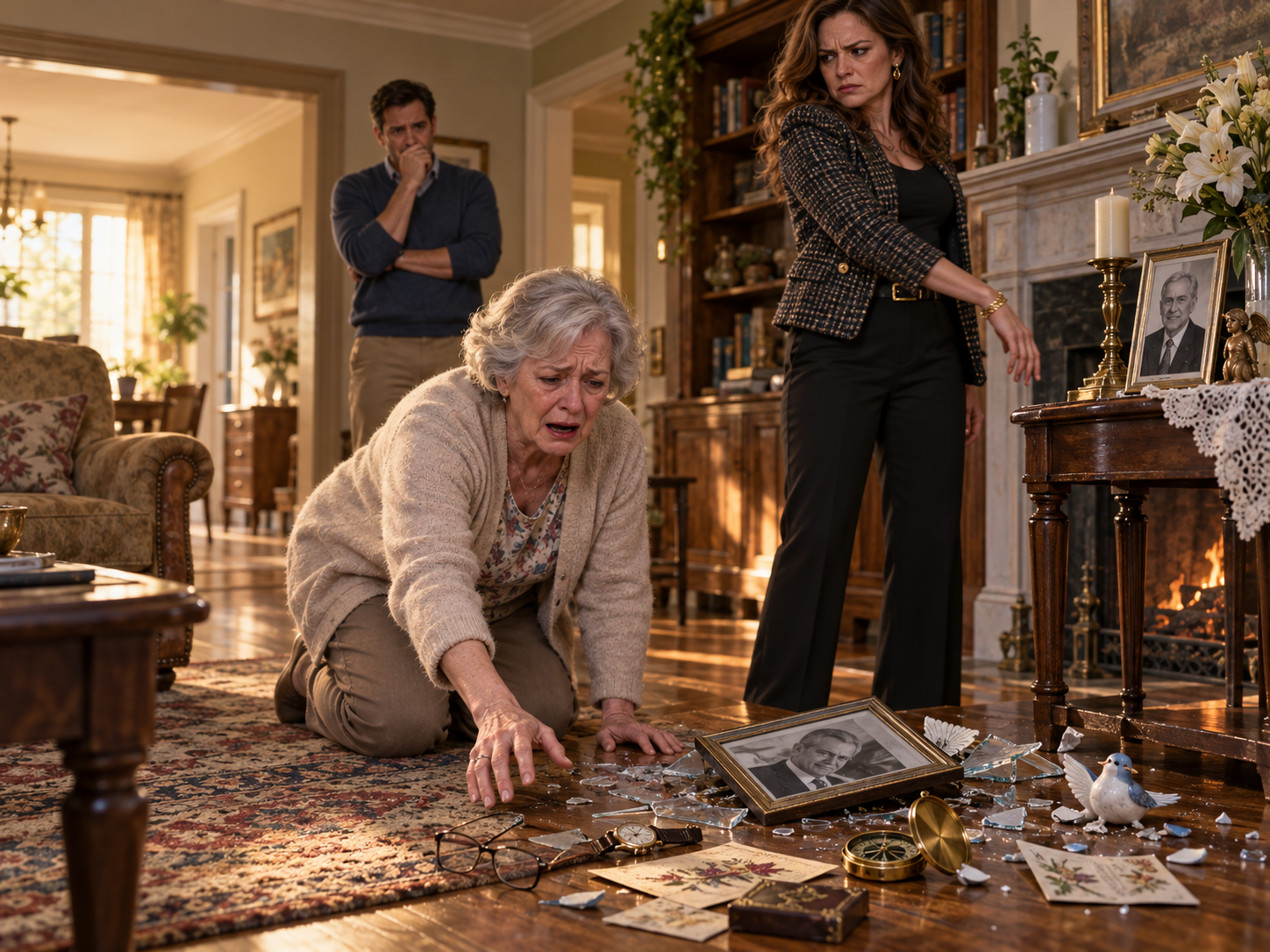
I did not faint.
I mention that because everyone seemed to expect me to.
Daniel reached for my arm.
Emily brought water.
Sophie knelt beside my chair.
Someone suggested calling a doctor.
I waved them away.
At seventy-nine, people are always waiting for your body to confirm what they already believe about you.
Fragile.
Confused.
Overwhelmed.
Done.
I had almost been knocked to the floor once that day.
I had no intention of going down a second time.
“Explain it,” I said.
Daniel pulled his chair closer.
“The coordinator has copies of every major payment.”
“Why?”
“Because Mom insisted on handling everything through one folder.”
Of course she had.
Even control leaves records when it becomes complicated enough.
Daniel pointed to several lines.
“The first major deposit was right after your transfer.”
I looked.
The date matched.
March 18.
Two days after thirty-five thousand dollars had left my account.
“So she used that money immediately.”
“Yes.”
“What about the rest?”
Daniel hesitated.
“Some may not be yours.”
“Some?”
“Grandma…”
“Say it.”
“There are payments from another account with the last four digits matching the savings account you used years ago when you helped me with college.”
My blood went cold.
That account still existed.
I rarely touched it.
After my hip surgery, Linda had helped me set up online access because I hated doing banking on my phone.
She had sat beside me at my kitchen table.
I remembered the tea going cold.
I remembered writing passwords on a card before she told me never to leave passwords lying around.
I remembered changing them.
Or thought I remembered.
A terrible uncertainty opened inside me.
“Are you saying she had access?”
“I don’t know.”
The distinction mattered.
We had proof of payments connected to an account.
We did not yet know how.
I forced myself to breathe.
“Then we don’t accuse her of what we cannot prove.”
Daniel stared at me.
“After today, you’re still worried about being fair?”
“Especially after today.”
Anger is not an excuse to become careless with the truth.
That was the entire reason we were in this mess.
Linda had decided what version of reality suited her and expected everyone else to live inside it.
I would not do the same.
“Where is she?”
Daniel looked toward the ballroom entrance.
“Gone.”
“Gone?”
“She left.”
Sophie stood.
“I saw her take her purse.”
Daniel cursed under his breath.
“Her car?”
A groomsman near the door shook his head.
“Still outside.”
So she was somewhere in the venue.
Perhaps crying.
Perhaps hiding.
Perhaps preparing another explanation.
I looked again at the payment sheet.
I recognized the account number.
There was no mistake.
“How much?”
Daniel did not answer.
“Daniel.”
“Grandma, we don’t know what every payment represents.”
“How much came from that account?”
He stared at the paper.
“Fourteen thousand eight hundred.”
I closed my eyes.
Together with the transfer, that meant nearly fifty thousand dollars connected to my money.
Money I had not intended to spend on a wedding.
My savings were not limitless.
Suddenly all the small things I had postponed seemed ridiculous.
The new mattress.
The repair to the back steps.
Replacing the old water heater before it failed.
I had told myself to wait.
Be sensible.
Save.
Meanwhile, crystal chandeliers reflected light over two hundred plates.
I began to laugh.
Sophie looked alarmed.
“Agnes?”
“I’m sorry.”
I covered my mouth.
But the laughter kept coming.
Not joy.
Not hysteria.
Something in between.
“I have been sleeping on the same mattress for sixteen years because I thought nine hundred dollars was irresponsible.”
Daniel’s face broke.
“Oh, Grandma.”
“And your mother bought orchids.”
Sophie looked toward the enormous white arrangements.
“They’re roses.”
“That is somehow worse.”
She laughed through tears.
So did Daniel.
For half a minute, the three of us sat together laughing at something that was not funny because the alternative was too painful.
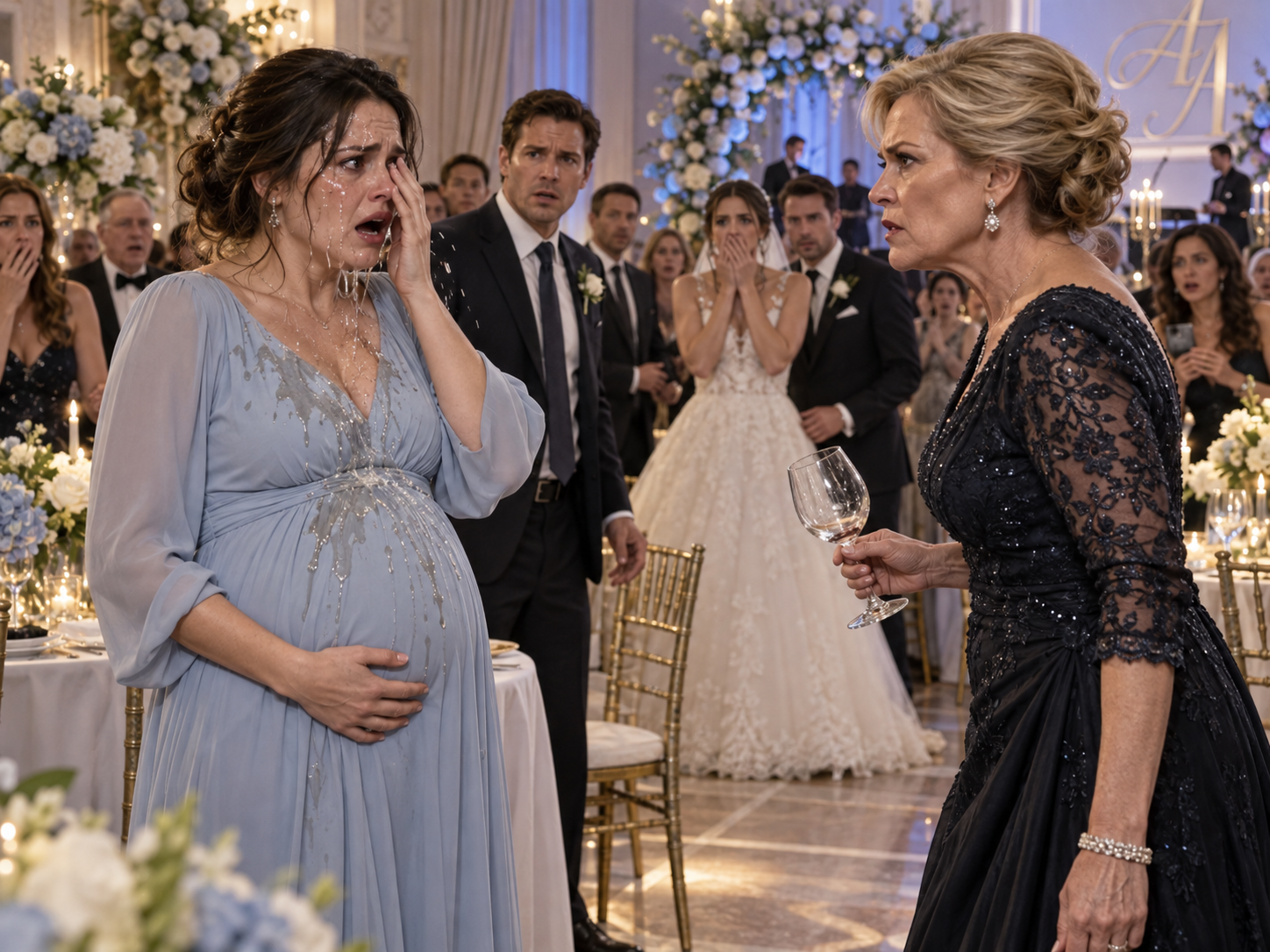
Then a voice behind us said, “You shouldn’t be looking at those.”
Linda.
We turned.
She stood near the table.
Her makeup was smudged.
Her perfect hair had loosened near one temple.
For the first time all day, she looked her age.
Not weak.
Human.
She saw the document.
Her face changed.
Daniel stood.
“Were you accessing Grandma’s savings account?”
Linda’s gaze moved toward me.
“Agnes gave me access when she had surgery.”
“For what?”
“To help her.”
“Help me how?” I asked.
“You couldn’t manage everything.”
“I asked you to help me pay two bills.”
“You were confused from the medication.”
“I was recovering from surgery. I was not incompetent.”
“I never said you were.”
“You are saying it now.”
Linda looked around.
There were fewer people watching this time. Music had resumed. Some guests were dancing. Others pretended not to notice us.
She lowered her voice.
“I transferred money with the intention of replacing it.”
There it was.
Not uncertainty.
Not confusion.
Admission.
Daniel’s expression became empty.
“How much?”
“I don’t know.”
“Yes, you do.”
“Not exactly.”
I held up the payment sheet.
“Fourteen thousand eight hundred dollars?”
Her mouth tightened.
“That sounds right.”
Sophie sat down hard.
Daniel looked as though he could no longer recognize the woman in front of him.
“You took almost fifteen thousand more?”
“I borrowed it.”
“Without asking.”
“I was going to replace it.”
“When?”
“When things settled down.”
I laughed once.
There it was again.
Later.
After.
When things settled.
A future date where every wrong decision would supposedly become harmless.
“You lied about Daniel to get thirty-five thousand dollars,” I said. “Then you took nearly fifteen thousand more from an account you could access because I trusted you after surgery.”
Linda flinched.
“I did not think of it that way.”
“How did you think of it?”
She answered immediately.
“As finishing what needed to be finished.”
That sentence explained her better than any apology could have.
Not stealing.
Finishing.
Not lying.
Managing.
Not humiliating.
Organizing.
Linda had renamed everything until she could live with it.
She looked toward Daniel.
“The deposits were already paid. Contracts were signed. If I backed out, we would lose money.”
Sophie shook her head.
“You signed those contracts.”
“I was trying to give you something beautiful.”
“I told you I didn’t want it.”
“You would have regretted a cheap wedding.”
“No, Linda. You would have.”
Linda stared at her.
Sophie stood.
“I need you to hear me.”
Her voice was calm now.
“This was never my dream wedding.”
Linda looked physically struck.
“I gave you everything.”
“No. You gave me what you wanted me to want.”
Silence.
Daniel stepped beside Sophie.
“And you used Grandma to do it.”
Linda’s eyes filled again.
“I did it for you.”
He shook his head.
“That’s the part you still don’t understand.”
“What?”
“You can’t keep hurting people and then say the reason was love.”
Linda looked at me.
I saw desperation there.
She needed someone to soften the moment.
In the past, I would have.
I would have said, She made a mistake.
I would have reminded Daniel that she was his mother.
I would have spoken gently to preserve a family that was already cracking beneath the weight of unsaid things.
Not this time.
I stood.
It took me longer than it once would have.
My knees protested.
My hip ached.
Daniel reached out, but I steadied myself.
Then I faced Linda.
“I want you to give me every record connected to my accounts.”
She stiffened.
“Agnes.”
“Every password you know. Every payment you made. Every transfer.”
“I said I’ll replace the money.”
“This is not only about repayment.”
“What else do you want from me?”
The question sounded almost offended.
I thought about it.
What did I want?
An apology?
An explanation?
A confession?
I already had all three in fragments.
None of them could return the trust I had carried into that morning.
“I want you to stop deciding that loving someone gives you the right to choose for them.”
Her face hardened again.
“I have spent my entire life being responsible for people who never appreciate it.”
“You are not responsible for me.”
“You needed help.”
“I asked you to pay two bills.”
“You could barely walk!”
“And now I can.”
“You’re seventy-nine!”
“Yes.”
I stepped closer.
“Stop saying my age as though it is an argument.”
Linda’s mouth closed.
“I am seventy-nine years old. I use a cane. I move slowly. Sometimes I need help.”
I felt every eye near us.
“None of those things make my money yours. None make my seat yours to change. None make my place in a photograph yours to erase. None make my dignity optional.”
Linda’s eyes dropped.
For once, she had nothing to rename.
I turned to Daniel.
“This is your wedding.”
He nodded.
“What do you want to do?”
He looked around.
Then at Sophie.
They communicated silently for a moment.
Sophie took his hand.
Daniel faced his mother.
“We want you to leave.”
Linda stared.
“What?”
“For tonight.”
“This is my son’s wedding.”
“Yes.”
“I planned this entire thing.”
“I know.”
“I paid—”
She stopped.
The irony landed before she finished.
Daniel’s face tightened.
“That’s exactly why you need to go.”
Linda shook her head.
“You don’t mean that.”
“I do.”
“Daniel.”
“Mom, please.”
She began to cry.
Real tears.
I had seen Linda cry many times.
At Michael’s funeral.
At Daniel’s graduation.
When she sold the house he grew up in.
Not all tears are manipulation.
Pain can be real even when the person feeling it caused the situation.
Daniel looked devastated.
But he did not take back the boundary.
“I love you,” he said.
Linda covered her mouth.
“I do. But you need to leave.”
She stared at him for a long time.
Then at Sophie.
Finally at me.
“Was it worth it?”
I knew what she meant.
Exposing her.
The scene.
The humiliation.
The wedding she believed I had ruined.
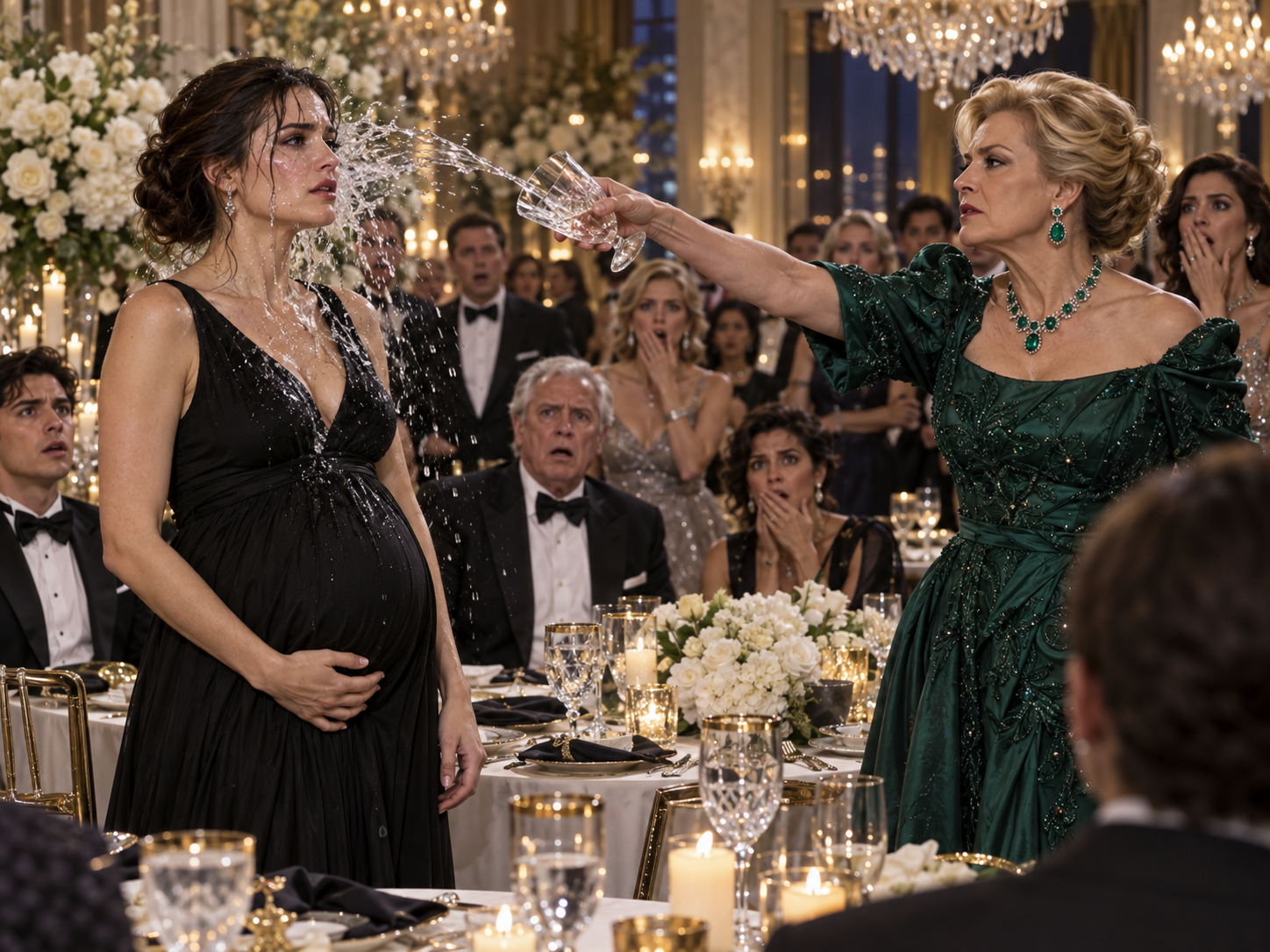
I thought of the moment her hands hit my shoulder.
The moment Emily caught me.
The moment Sophie told me she had never wanted me removed.
The moment Daniel learned his imaginary debt had paid for flowers and chandeliers.
“No,” I said.
Linda almost smiled.
Then I continued.
“None of this should have been necessary.”
Her smile disappeared.
She picked up her purse.
Daniel offered to walk her out.
“No.”
She brushed past him.
At the ballroom doors, she stopped.
For one hopeful second, I thought she might turn around and apologize.
She did not.
She left.
The doors closed.
Daniel stood staring at them.
I touched his arm.
“You can be angry and still love her.”
He nodded.
“You can love her and still make her leave.”
His eyes filled.
“I know.”
“Both can be true.”
He leaned down and hugged me.
Not carefully.
Not as though I were fragile.
He hugged me the way he had when he was ten years old and terrified of thunderstorms.
I held him.
Then Sophie wrapped her arms around both of us.
Behind us, somebody clapped.
We pulled apart.
It was Emily.
“That hug needs a photograph.”
I laughed.
“Absolutely not.”
Marcus, the photographer, appeared as if summoned by magic.
“Too late.”
He raised his camera.
Daniel put one arm around Sophie.
The other around me.
“Grandma,” he said, “cane or no cane?”
I looked at the polished wooden floor.
Then at him.
“Cane.”
“Good choice.”
“Your mother already tried removing it from the aesthetic.”
Sophie snorted.
Marcus lowered the camera because he was laughing.
When he raised it again, none of us posed perfectly.
Daniel’s eyes were red.
Sophie’s veil had come loose.
My hair was no longer smooth.
The flowers behind us were slightly crooked because someone had bumped the arrangement.
I held my cane.
We smiled.
The camera flashed.
It became my favorite photograph from the wedding.
Not because I looked young.
I did not.
Not because I looked strong.
I looked exactly seventy-nine.
Lines around my eyes.
Silver hair.
A body that had carried nearly eight decades and showed the evidence.
I loved that photograph because nothing had been erased.
Not age.
Not grief.
Not the mess of family.
Not the fact that love sometimes requires a boundary sharp enough to hurt.
The reception continued.
Not perfectly.
Perfect had already failed us.
It continued honestly.
Sophie changed into comfortable shoes.
Daniel removed his tie.
The DJ ignored the schedule Linda had created and took requests from the guests.
At ten thirty, someone brought me a slice of wedding cake so large I told them it could feed a family of four.
I ate nearly all of it.
At eleven, Daniel asked me to dance.
“I use a cane,” I reminded him.
“So?”
“I also have a dangerous left foot.”
“I’ll risk it.”
We went onto the dance floor.
He put one hand carefully around mine.
The music was slow.
“You know,” he said, “when I was little, I thought you were the toughest person alive.”
“Children are poor judges of character.”
“I’m serious.”
“You once thought your elementary-school principal lived in the gym.”
“She was always there.”
I laughed.
Then Daniel’s expression became serious.
“I stopped seeing it.”
“Seeing what?”
“How much you were protecting us.”
I shook my head.
“I protected you too much sometimes.”
“What do you mean?”
“I kept quiet because I thought conflict would hurt you.”
He looked toward the doors his mother had left through.
“Maybe it did the opposite.”
“Yes.”
That was hard to admit.
Silence can look like kindness from the inside.
From the outside, it sometimes looks like permission.
“I should have challenged your mother sooner,” I said.
“She would’ve hated you.”
“She already did.”
He laughed.
“Fair point.”
“But this isn’t only about her.”
He looked at me.
“You and Sophie have to build a marriage where neither of you avoids truth just because truth is inconvenient.”
He nodded.
“Okay.”
“And if you ever spend fifty thousand dollars on flowers again, I will haunt you.”
“Grandma, you’re not dead.”
“I’m planning ahead.”
That made him laugh so hard he nearly stepped on my foot.
For the first time all day, I felt light.
Not because everything was repaired.
It wasn’t.
The money remained gone.
Linda remained furious.
Daniel had years of habits to unlearn.
Sophie had entered a marriage already carrying wounds from a mother-in-law who had treated her boundaries as suggestions.
No speech fixed that.
No public revelation transformed us into a perfect family.
But truth had finally entered the room.
And truth, unlike perfection, gave us somewhere real to begin.
In the weeks after the wedding, the consequences arrived quietly.
Daniel came to my house the Monday after returning from his honeymoon.
He brought coffee, a folder, and an expression that reminded me of a boy arriving at the principal’s office.
Sophie came too.
Inside the folder was a repayment plan.
I did not ask them to repay money they had never knowingly borrowed.
Daniel insisted.
“This is not me paying for Mom’s lie,” he said. “This is me taking responsibility for the wedding I accepted without asking enough questions.”
I understood the distinction.
We compromised.
They would repay part of it slowly.
Linda would be responsible for the rest.
More importantly, I changed every account.
Every password.
Every access permission.
Daniel sat with me at the bank while I did it.
Not because I could not manage.
Because I asked him to come.
That difference mattered.
A month passed before Linda contacted me.
She did not call.
She sent a letter.
Four pages.
The first page explained herself.
The second page blamed wedding stress.
The third page spoke about Michael.
The apology did not appear until the fourth.
Even then, it was imperfect.
She wrote that she had convinced herself the money would eventually come to Daniel anyway.
That sentence hurt.
It told me she had looked at my savings and imagined them as future inheritance.
As money temporarily inconvenienced by my continued existence.
But the next sentence was different.
She wrote:
I see now that I was treating what might one day happen as permission to take from you today.
I read that sentence three times.
Then I folded the letter.
I did not forgive her immediately.
I do not believe forgiveness becomes more meaningful because it is rushed.
But I did agree, eventually, to meet her.
Not at my house.
Not at hers.
A café.
Neutral ground.
She looked older when she arrived.
So did I, probably.
For a while, we drank coffee.
Then Linda said, “I hated that photograph.”
I knew which one she meant.
The one of Daniel, Sophie, and me after the confrontation.
“Why?”
“Because you all looked happy.”
I waited.
She stared at her cup.
“And I wasn’t necessary.”
There it was.
The deepest truth she had spoken.
Not money.
Not taste.
Not appearances.
Necessity.
Linda had wanted to be necessary.
Necessary to the wedding.
Necessary to Daniel.
Necessary to every decision.
Some people believe being needed is the safest form of being loved.
Then, when others grow independent, they mistake freedom for rejection.
“I understand that,” I said.
She looked at me in surprise.
“Understanding isn’t permission.”
Her eyes lowered.
“I know.”
“Do you?”
“I’m trying.”
That was the only promise from her I trusted.
Not I’ve changed.
Not It will never happen again.
I’m trying.
Trying can be measured.
Months passed.
She repaid the unauthorized fourteen thousand eight hundred dollars first.
Then she began repaying the rest.
Slowly.
Sometimes late.
But it came.
Daniel and Sophie moved into a smaller apartment than Linda wanted.
They hosted Thanksgiving themselves.
There were no place cards.
At Christmas, Linda asked before rearranging the serving dishes.
That may sound ridiculous.
For us, it was progress.
She and I never became close.
Some stories end with hugs because people like the shape of reconciliation.
Ours did not.
We became careful.
Civil.
Occasionally warm.
We learned that a boundary is not a punishment.
It is information.
This far.
No farther.
The following spring, Daniel and Sophie visited me with their wedding album.
We sat at my kitchen table.
Sophie turned the pages slowly.
The ceremony.
The vows.
The first kiss.
The family portraits.
There I was in the front row.
There I was beside Daniel.
There I was holding my cane.
No one had edited me away.
Then we reached the photograph Emily had insisted on after Linda left.
Sophie touched the page.
“This is still my favorite.”
Daniel smiled.
“Mine too.”
I studied my own face.
I did not look weak.
But that was not the lesson.
Weak people deserve photographs too.
Sick people.
Old people.
People who need canes.
People whose hands shake.
People who cannot stand without help.
Dignity should never depend on whether someone photographs beautifully.
Linda had been wrong before she ever touched me.
The push simply made her belief visible.
I closed the album.
Daniel looked at me.
“You okay?”
“Yes.”
And I was.
Not untouched.
Not unchanged.
But okay.
I sometimes think about what would have happened if Emily had not caught me.
Perhaps I would have fallen.
Perhaps I would have broken another hip.
Perhaps an ambulance would have arrived before the vows.
People would have called the wedding a disaster.
But the real disaster had begun long before that afternoon.
It began each time one of us swallowed the truth to avoid Linda’s reaction.
Each time Daniel called surrender compromise.
Each time Sophie allowed one more decision to be taken from her because arguing seemed exhausting.
Each time I told myself dignity meant suffering quietly.
Linda built her control from those small permissions.
One at a time.
So did I hate her?
No.
That surprises people when I tell the story.
Hatred would have been easier.
Linda loved my son.
She loved Daniel.
She probably loved me once, in whatever complicated way she knew how.
But love does not automatically make behavior good.
A person can love you and still lie to you.
Love you and still control you.
Love you and still use your fear, age, loyalty, grief, or generosity against you.
Sometimes the most important sentence in a family is not “I love you.”
Sometimes it is “You may not do that to me.”
I was seventy-nine years old when I finally learned to say it.
Too late?
Perhaps.
But late is not never.
The last photograph in the album was not posed.
Marcus must have taken it near the end of the night.
I had not known.
Daniel and Sophie were dancing in the background.
I was seated beside the dance floor, eating cake.
My cane rested against my chair.
My shoes were off.
My hair was a disaster.
I was laughing at something Emily had said.
Behind me, one of the giant flower arrangements leaned slightly to the left.
The expensive wedding Linda had fought so hard to perfect was coming apart around the edges.
Napkins were crumpled.
Candles had burned low.
Someone had abandoned a champagne glass on the floor.
Nothing was controlled anymore.
And everyone in the photograph looked happy.
I asked Daniel for a copy.
He had it framed for me.
It sits now on the shelf above my desk.
Not the formal portrait.
Not the ceremony.
That one.
The imperfect picture.
Whenever I look at it, I remember Linda telling me I would make the wedding photographs ugly.
I remember her hand on my shoulder.
I remember nearly falling.
And then I remember standing at the microphone.
I remember Daniel telling the truth.
I remember Sophie choosing her own wedding.
I remember walking onto the dance floor with a cane in one hand and my grandson’s hand in the other.
Most of all, I remember this:
Linda tried to push me out of the picture.
Instead, she forced me to see the whole thing.
And once I saw it, I refused to disappear.