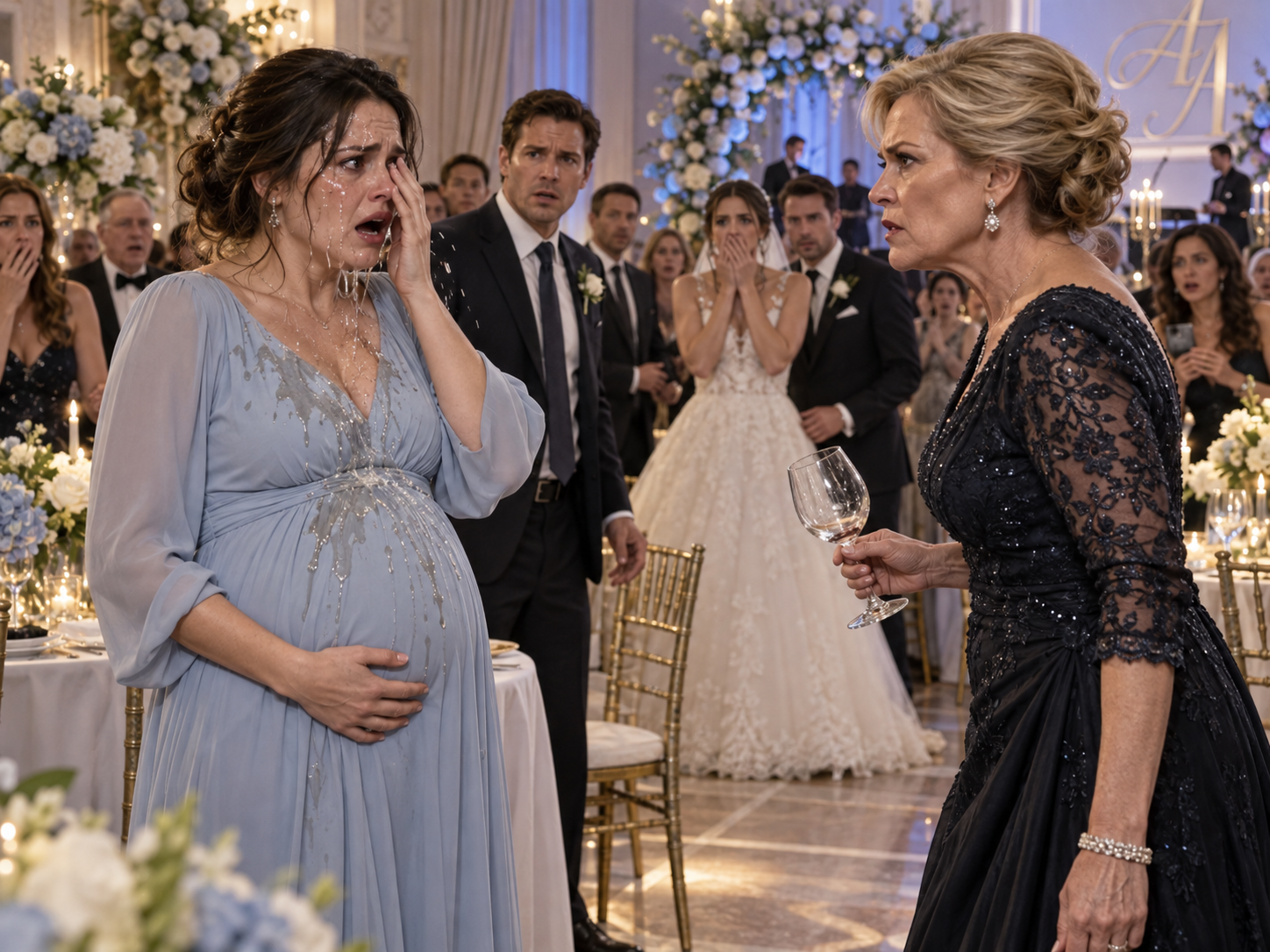
For two weeks, Patricia disappeared.
No calls.
No messages.
No casseroles.
Nothing.
At first, I kept waiting.
Every time someone walked past our apartment door, my shoulders tightened.
Every time my phone rang from an unfamiliar number, I expected her voice.
But silence became its own strange kind of relief.
I could breathe again.
Daniel struggled more.
I watched him move through grief without calling it grief.
He read old messages from his mother.
He remembered incidents differently.
Once, while assembling the last shelf in the nursery, he stopped with a screwdriver in his hand.
"When I was nineteen, I wanted to transfer colleges."
I looked up from folding baby clothes.
"What happened?"
"My mom got sick."
"What do you mean?"
"Headaches. Chest pain. She kept saying the stress of me leaving was affecting her health."
He stared at the half-built shelf.
"So I stayed."
"Was she sick?"
"I don't know."
He looked at me.
"I never asked."
That was how control survived in Patricia's family.
Not through chains.
Through guilt.
Through emergencies.
Through the belief that disappointing her meant injuring her.
I couldn't fix that for Daniel.
I didn't try.
He started seeing a therapist.
That was his decision.
I respected him more for making it than I would have respected another apology.
Three weeks after the family meeting, Marcus called.
"I'm letting you know the store received a request."
"What kind of request?"
"An attorney representing Patricia asked whether the surveillance footage could be destroyed because she claimed it violated her privacy."
I laughed despite myself.
"Can it?"
"No."
My laughter stopped.
"Is everything safe?"
"The official copy is preserved."
"And the backup?"
He was quiet for a moment.
Then he said, "That's why I'm calling."
My heart tightened.
"What happened?"
"Nothing happened."
"Marcus."
"The backup is safe."
I closed my eyes.
He continued.
"Your father would've hated this whole situation."
A lump formed in my throat.
"You really knew him well?"
"Well enough."
I sat down on the edge of the couch.
"What was he like at work?"
Marcus chuckled.
"Annoying."
I smiled.
"That sounds possible."
"He didn't like bullies."
My smile disappeared.
Marcus continued.
"There was a supervisor who used to change people's hours after the fact. Most of us complained privately. Your dad made copies of the schedules."
I stared at the floor.
"Copies?"
"Every week."
Something warm and painful moved through my chest.
"Why?"
"Because your dad used to say people lie best when they think they're the only ones keeping records."
I couldn't speak.
Marcus seemed to understand.
After a moment, he added, "That's why I kept the backup."
"You said it was policy."
"It was."
A pause.
"And it was also something I learned from Tom."
Tears filled my eyes.
My father had been dead for fourteen years.
And yet somehow, in the worst week of my adult life, a lesson he'd taught another man had returned to protect me.
"Thank you," I whispered.
"Take care of that baby."
"I will."
"And Megan?"
"Yes?"
"Don't spend too much time wondering why someone didn't believe you."
I swallowed.
"Why not?"
"Because the truth doesn't become less true while people are catching up."
After we hung up, I sat alone in the nursery.
Sunlight came through the blinds in thin golden lines.
My daughter's crib stood against the wall.
Above it, Daniel and I had hung wooden letters spelling her name.
EMMA.
Patricia had hated the name.
She preferred Elizabeth.
For months, I had treated even that like a negotiation.
Now I understood something I should have understood much earlier.
Boundaries were not punishments.
They were doors.
And I was allowed to decide who had keys.
Emma was born nineteen days later.
Labor started at four in the morning.
Daniel drove me to the hospital with both hands locked around the steering wheel and terror on his face.
Under any other circumstance, I would have laughed at him.
Instead, between contractions, I reached over and squeezed his wrist.
"You can breathe."
"I'm breathing."
"You're not."
"I'm trying."
The labor was long.
Nothing about it felt graceful.
I cried.
I swore.
At one point I told Daniel I hated him for being biologically incapable of taking my place.
He agreed this was unfair.
Twelve hours later, they placed my daughter on my chest.
Every sound in the room disappeared.
She was warm.
Red-faced.
Furious.
Perfect.
"Hi," I whispered.
Her tiny hand opened against my skin.
Daniel bent over both of us and cried openly.
For several minutes, nothing else existed.
Then his phone began vibrating on the chair.
Once.
Twice.
Again.
We both knew who it was.
Daniel looked at me.
I didn't have to say anything.
He turned the phone face down.
Patricia was not at the hospital.
She did not meet Emma that day.
Or the next.
That decision was not revenge.
It was consequence.
There is a difference.
Three days after we returned home, a letter arrived.
Patricia had written it by hand.
Six pages.
Daniel read it first.
Then he handed it to me.
The letter contained apologies without responsibility.
I'm sorry you were frightened.
I'm sorry things were misunderstood.
I'm sorry everyone turned against me.
She wrote that she had panicked when the situation "got out of control."
She claimed the money she'd offered Marcus had been meant as gratitude for his time.
She said family should forgive.
At the end, she wrote:
I hope Megan understands someday that everything I did came from loving my son and grandchild too much.
I read that sentence twice.
Then I folded the letter.
Daniel watched me.
"What do you think?"
"I think she still believes love excuses control."
He nodded.
"What do you want to do?"
I looked toward Emma sleeping in the bassinet.
"Nothing."
"Nothing?"
"Not yet."
He didn't argue.
That mattered.
Months passed.
Patricia eventually entered our lives again, but only at the edges.
Supervised visits.
Scheduled times.
No keys.
No unannounced arrivals.
No taking Emma anywhere alone.
The first time she came to our apartment after the birth, she stood outside and waited after knocking.
Daniel opened the door.
She glanced at the lock.
Then at me.
I knew what she was thinking.
Once, she had wanted a key because she believed being family entitled her to enter whenever she pleased.
Now she needed permission.
For someone else, that might have seemed petty.
To me, it felt like safety.
She never apologized in the way I wished she would.
Some people cannot admit what they did because confession would force them to surrender the version of themselves they need to survive.
Patricia needed to believe she was a protective mother.
A devoted grandmother.
A misunderstood woman whose family had overreacted.
I stopped trying to change her story.
I had mine.
And unlike hers, mine did not need to keep changing.
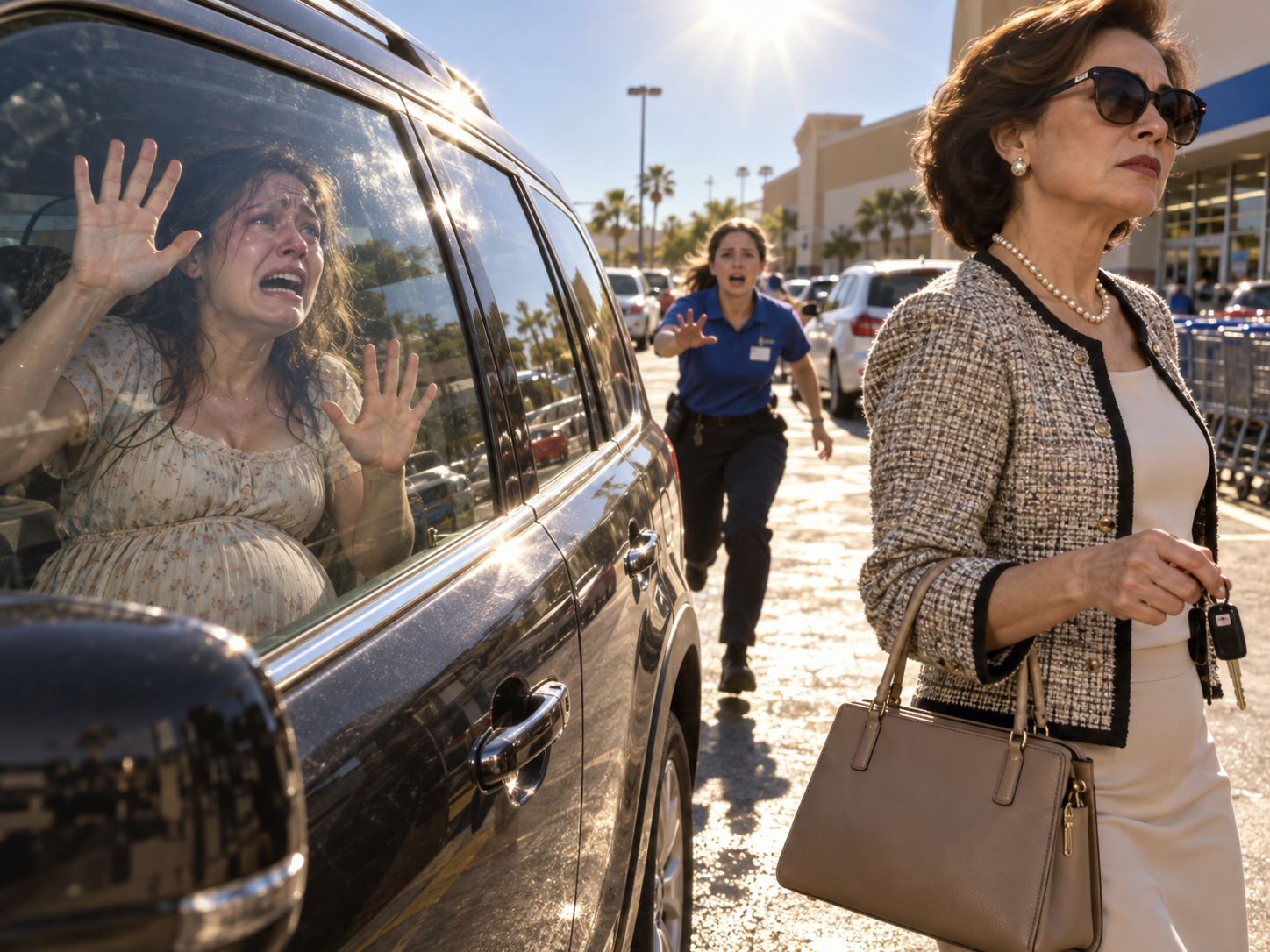
Sometimes, late at night, I still remembered the parking lot.
The white sunlight.
The hot leather.
The dead phone in my hand.
The moment Patricia put my keys into her purse and walked away.
But the memory that followed had changed.
I no longer ended the scene with myself trapped inside that car.
I remembered Kayla running toward me.
I remembered strangers gathering.
I remembered Marcus opening the security file.
I remembered Daniel sitting at the table and finally saying the words I had needed from him.
I should have believed you.
And most of all, I remembered the camera.
Silent.
Uninterested.
Patient.
It had watched Patricia take the keys.
Watched her close the door.
Watched her press the button.
Watched her leave.
Then it had watched her return days later carrying an envelope full of money, believing the truth was something she could negotiate away.
What she didn't know was that Marcus had already made a copy.
He had placed it somewhere she couldn't reach.
A small piece of evidence protected by a man who had once known my father.
That was the part Patricia never planned for.
She understood fear.
She understood guilt.
She understood how to make people question themselves.
She understood how family loyalty could blur the truth.
But she never understood something my father apparently had.
When a person depends on controlling the story, all it takes to defeat them is one record they cannot rewrite.
The day Patricia locked me inside that car, she believed she had taken my power because she held the keys.
For nine minutes and twelve seconds, maybe she had.
But keys only control doors.
They don't control cameras.
They don't control witnesses.
And eventually, they don't control the truth.