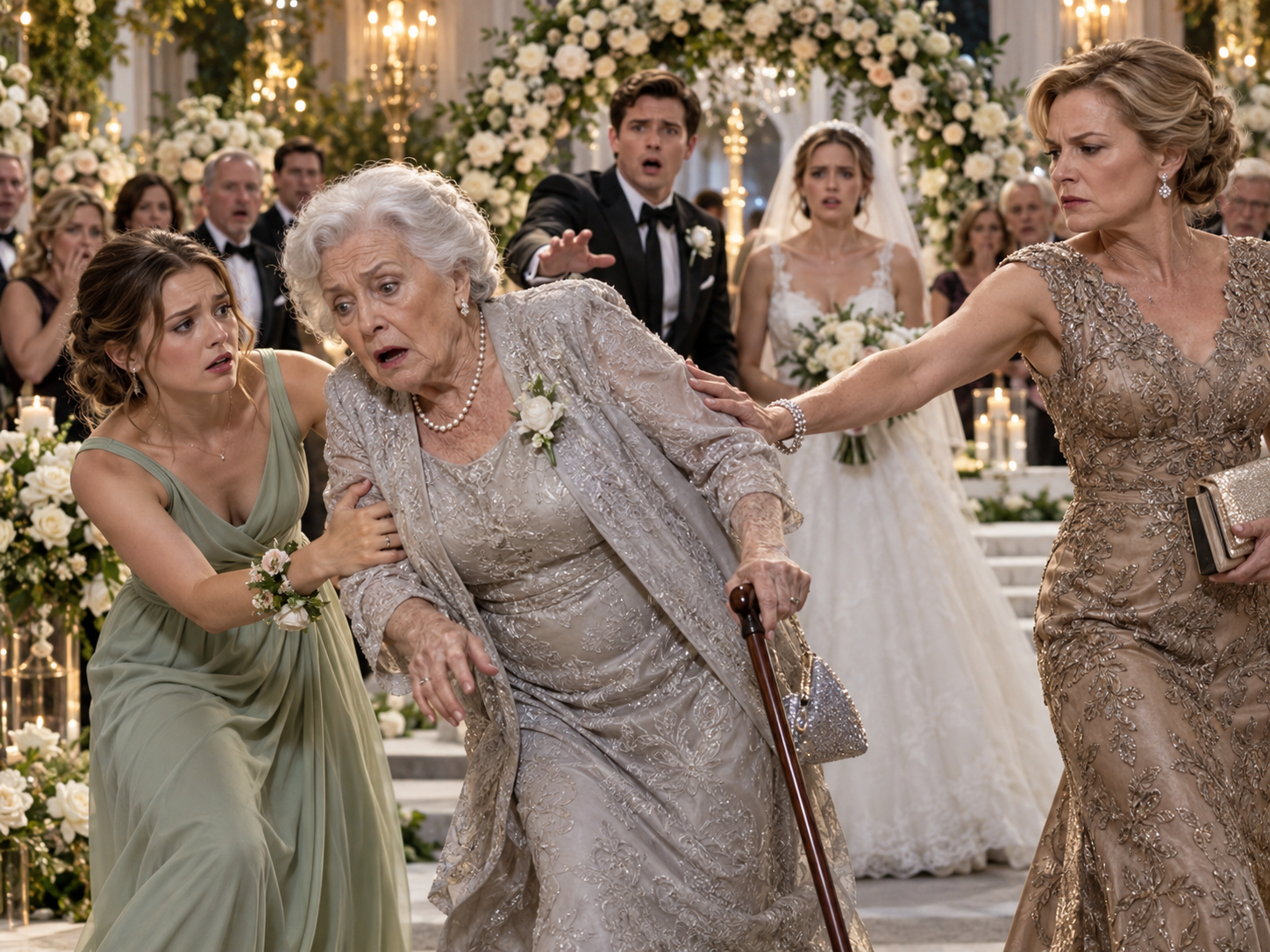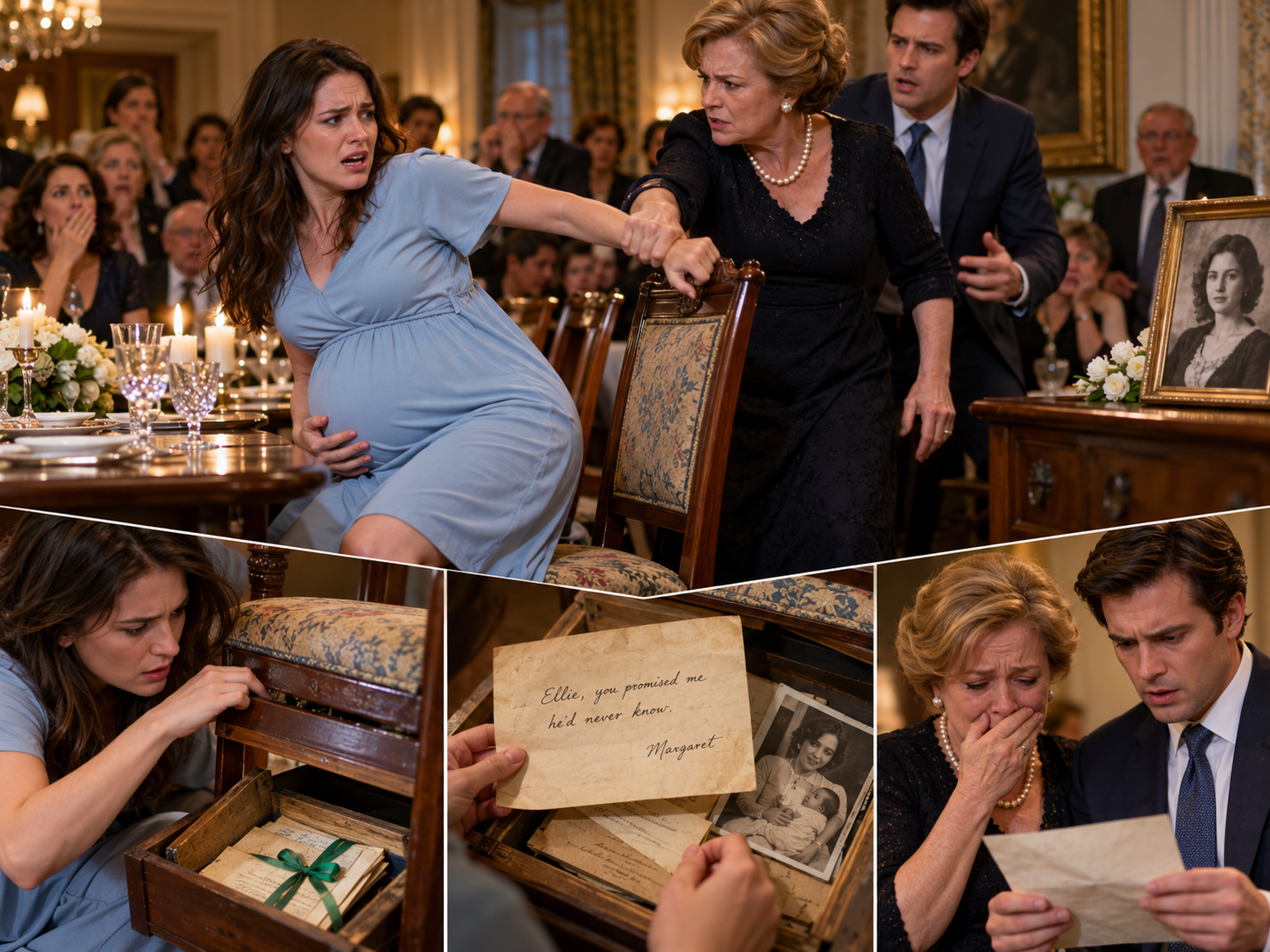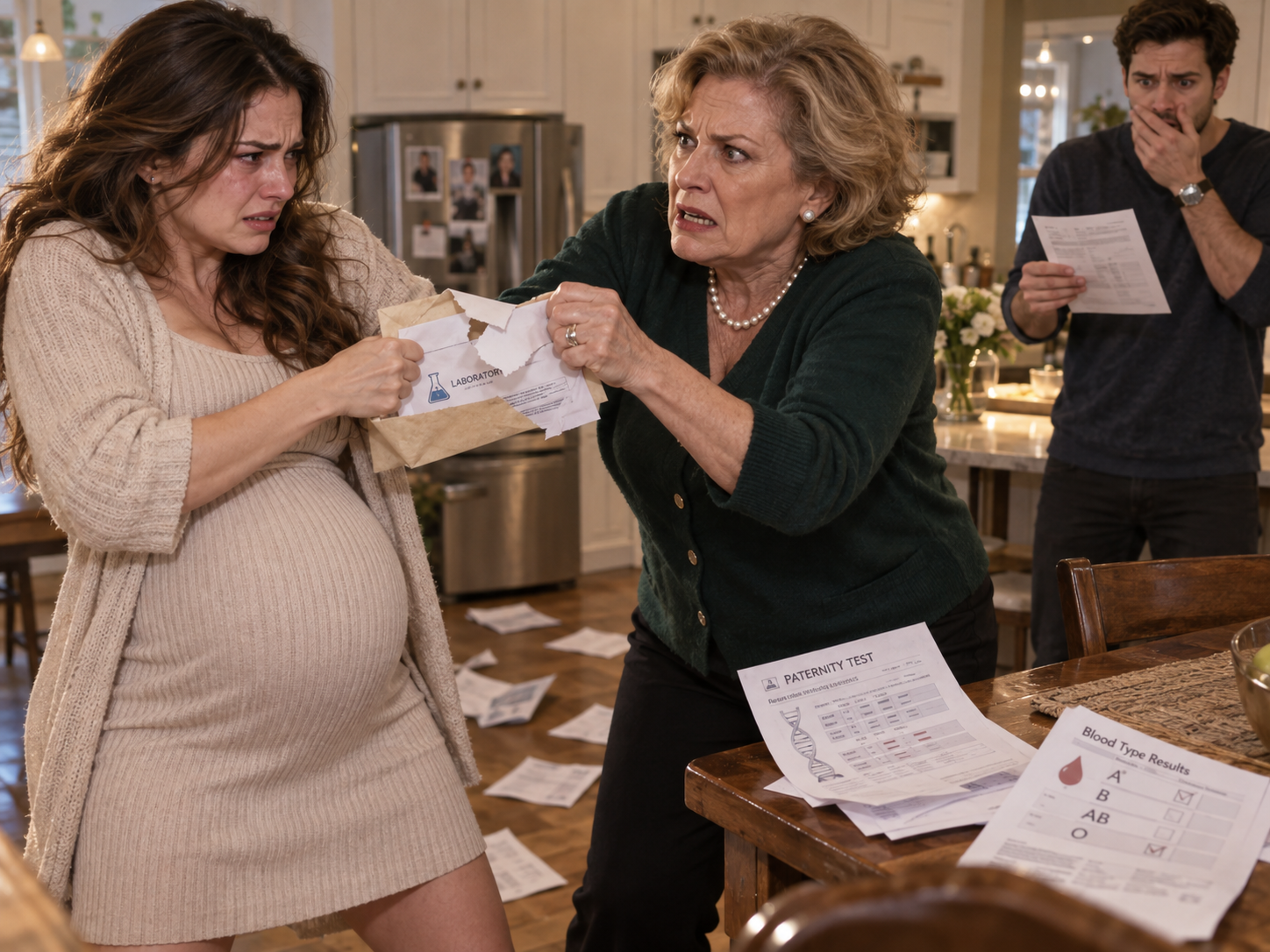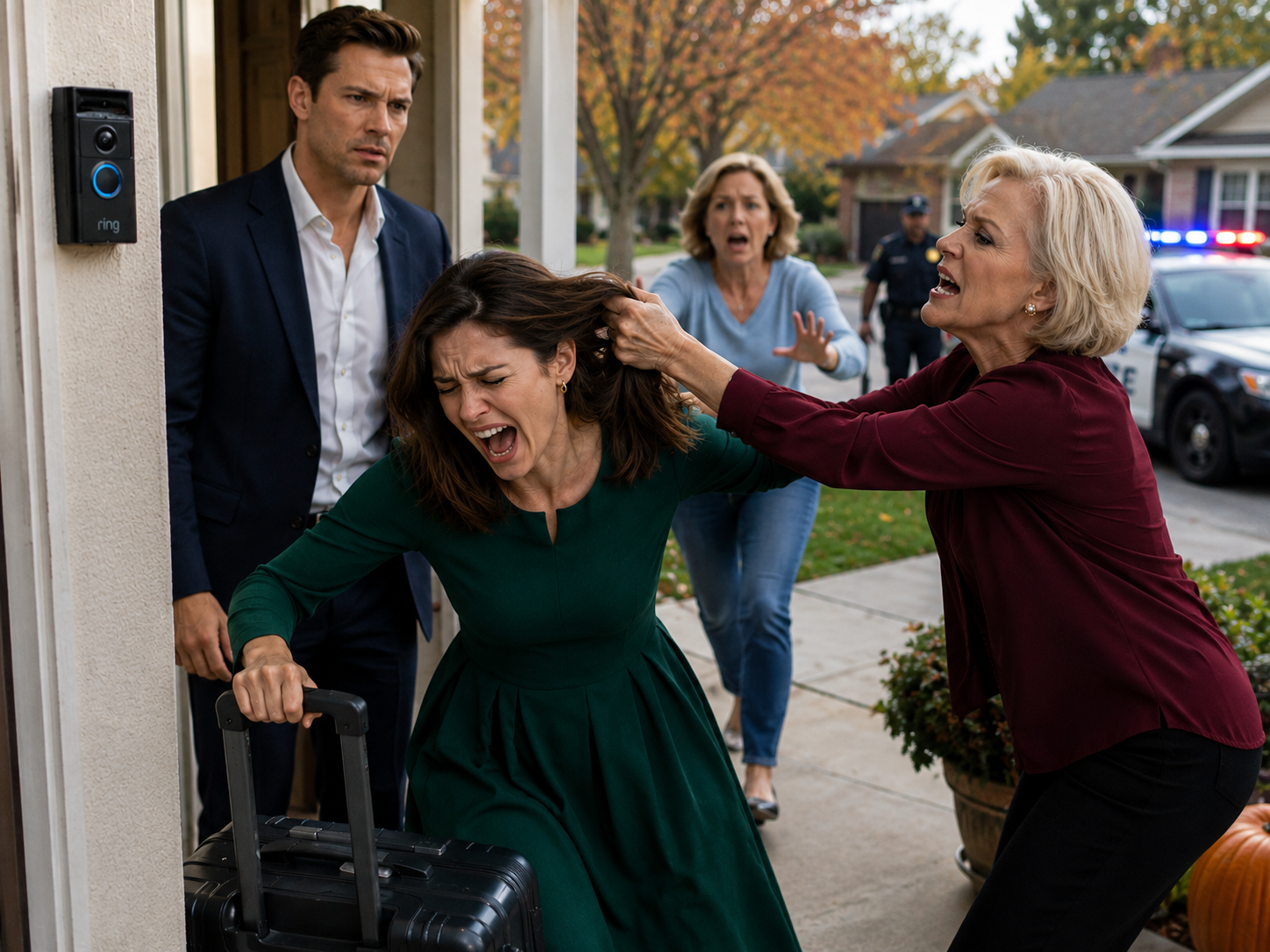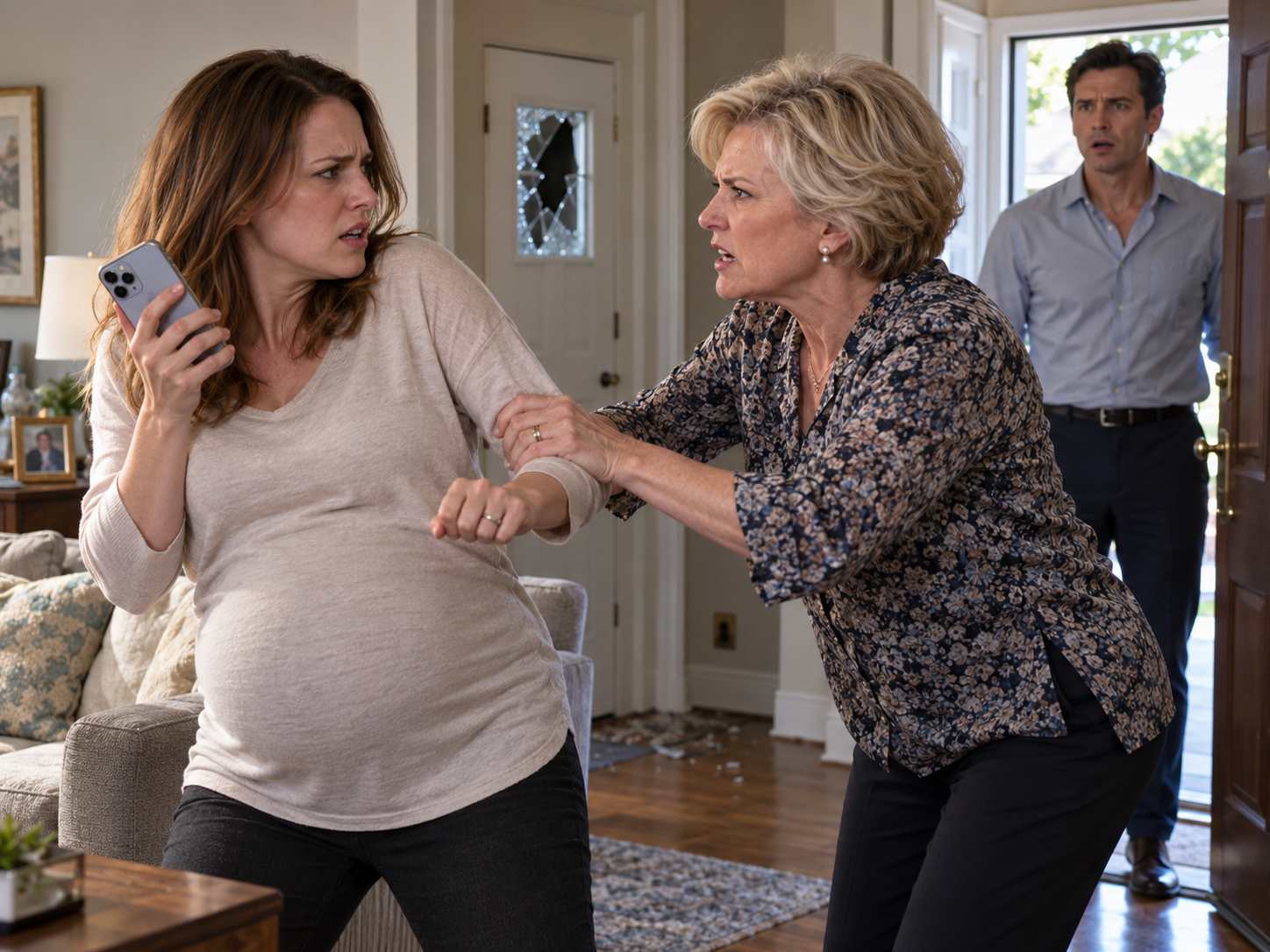
My Mother-in-Law Pushed Me Down the Stairs While I Was Eight Months Pregnant—Then My Husband’s Family Agreed to Call Me a Liar
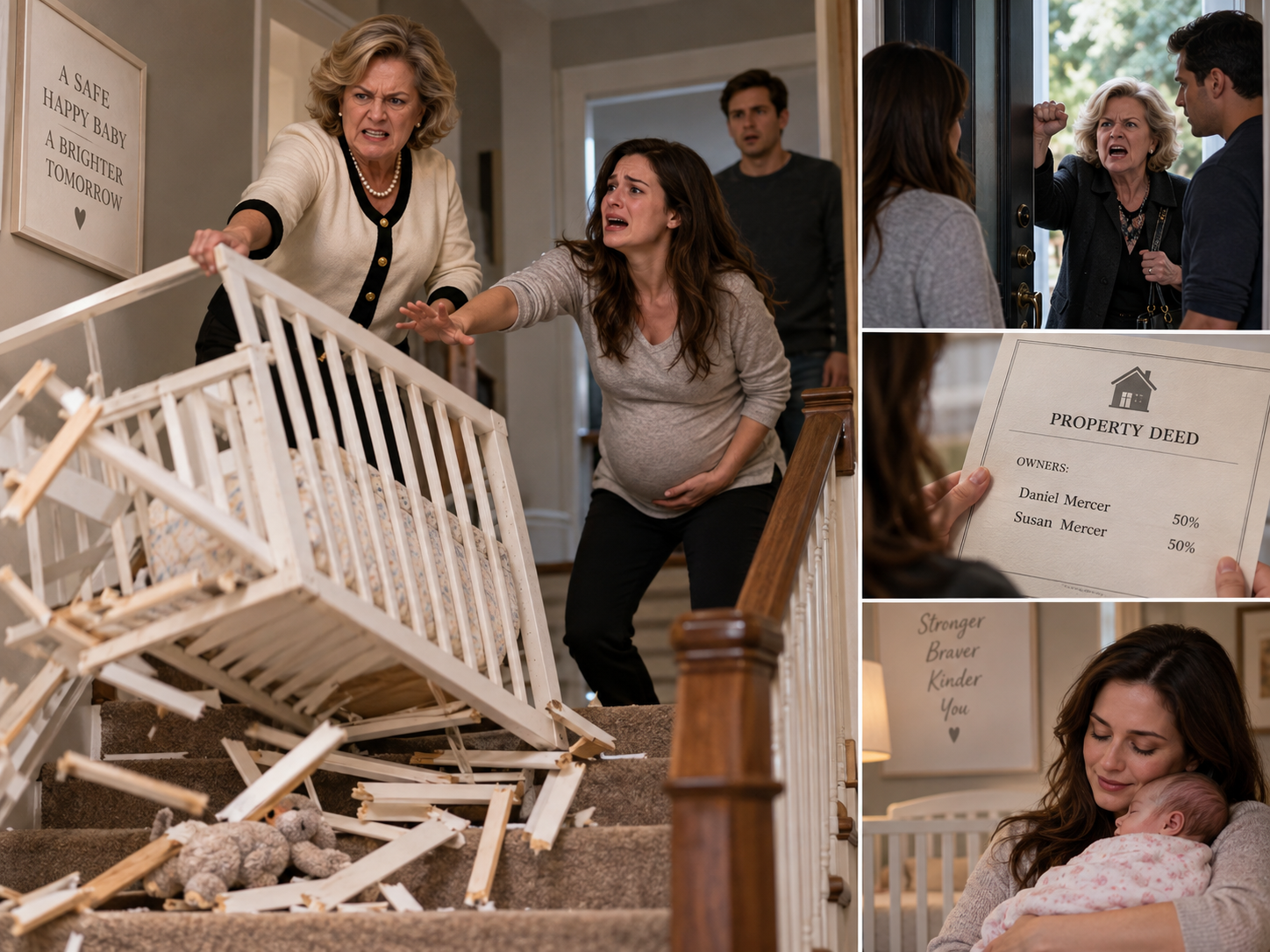
The first thing my mother-in-law said after I fell down the stairs was not my name.
It wasn’t, “Sarah, are you hurt?”
It wasn’t, “Call an ambulance.”
It wasn’t even, “Oh my God.”
It was:
“She fell by herself.”
I was lying twisted on the hardwood at the bottom of the staircase, one hand pressed beneath the heavy curve of my eight-month-pregnant belly, the other still gripping my phone.
For several terrifying seconds, I couldn’t breathe.
Then I couldn’t feel the baby move.
The room had gone strangely quiet even though there were more than twenty people in the house.
Someone dropped a wineglass.
Someone screamed.
Footsteps pounded toward me.
And above all of it, Eleanor’s voice cut through the room.
“She slipped! I didn’t touch her!”
I looked up.
My mother-in-law stood at the top of the stairs.
Her face was pale.
Her right hand was still half extended toward the place where I had been standing.
Rachel appeared behind her.
Michael pushed through the crowd below.
“Sarah!”
He dropped to his knees beside me.
I tried to answer.
Pain shot across my lower back.
My stomach tightened so hard I thought I was going to vomit.
“Don’t move,” someone said.
Maybe it was Michael.
Maybe it was his uncle.
I could barely hear anything over the blood roaring in my ears.
Michael touched my cheek.
“Sarah, look at me.”
I did.
His face was terrified.
I wanted to say, Your mother did this.
I wanted to tell him how she had followed me upstairs.
How she had cornered me near the landing.
How she had demanded my phone.
How her fingers had closed around my wrist.
How she had lunged when I pulled away.
But Eleanor came rushing down the stairs before I could get the words out.
“She was upset,” she said breathlessly. “She stormed upstairs, and then she lost her balance. Michael, I swear to you, she just fell.”
“That’s not—”
The pain clenched again.
My sentence broke into a gasp.
Rachel came down more slowly.
She wasn’t crying.
That was what I remember most clearly.
Everyone else looked frightened.
Rachel looked calculating.
“What happened?” Michael demanded.
Rachel’s eyes flicked from me to Eleanor.
Only for a second.
Then she said, “Mom’s telling the truth.”
I stared at her.
Rachel met my eyes.
She knew.
She had been upstairs.
She had seen enough to know.
And yet she said it again.
“Sarah fell.”
My husband looked at his sister.
Then at his mother.
Then at me.
Three people.
Two stories.
That was when I understood what Eleanor had always known.
Truth did not necessarily belong to the person telling it.
Sometimes truth belonged to the side with more witnesses.
The ambulance arrived nine minutes later.
It felt like an hour.
By then the baby had moved once.
Just once.
A faint roll under my palm.
I cried so hard when I felt it that the paramedic thought my pain had worsened.
“My baby,” I kept saying.
“We’re monitoring you,” the paramedic told me as they lifted me onto the stretcher. “We’re going to take care of both of you.”
Michael climbed into the ambulance with me.
Eleanor stood in the doorway.
Her hand covered her mouth.
Rachel stood beside her.
For one irrational second, I expected Rachel to break.
I expected her to run after us and say she had lied.
Instead, she folded her arms.
As the ambulance doors closed, Eleanor leaned toward Rachel and whispered something.
I couldn’t hear it.
But I saw Rachel nod.
That nod followed me all the way to the hospital.
Hours later, when the doctors finally told me the baby appeared unharmed, I cried again.
There was bruising along my hip and lower back. I had strained muscles. They wanted to monitor me overnight for signs of placental abruption or early labor.
But the heartbeat was steady.
Our daughter was alive.
Safe.
Michael sat beside the bed holding my hand.
For the first time since the fall, we were alone.
I turned toward him.
“Your mother grabbed me.”
His fingers went still.
I watched his face change.
Not dramatically.
That would have been easier.
Instead, something simply closed.
“What?”
“She followed me upstairs. She tried to take my phone. I pulled away. She grabbed my wrist.”
Michael stared at me.
“And I fell.”
He stood.
“Sarah…”
“She caused it.”
“What exactly are you saying?”
I hated that question.
Not because it was unreasonable.
Because I knew the answer he wanted.
He wanted a version that would allow everything to go back to normal.
“I’m saying your mother came after me at the top of the stairs.”
“Did she push you?”
I remembered Eleanor’s hand.
Her fingers around my wrist.
Her body moving toward mine.
The sudden shift of my weight.
My heel losing the edge of the step.
“I don’t know if she meant for me to fall.”
Michael ran both hands through his hair.
“That’s different from saying she pushed you.”
“She grabbed me.”
“Mom says she never touched you.”
“She’s lying.”
“And Rachel?”
My throat tightened.
“What about her?”
“She says she saw you lose your balance.”
I turned my face away.
The fetal monitor beeped steadily.
Michael waited.
“You believe them?” I asked.
“I didn’t say that.”
“You didn’t have to.”
“That’s not fair.”
I looked at him then.
There was exhaustion under his eyes.
Fear too.
And something worse.
Doubt.
Eight years together.
Five years married.
A daughter weeks away from being born.
And there it was.
Doubt.
I laughed once.
It didn’t sound like laughter.
“You know why she followed me upstairs?”
Michael said nothing.
“Because I recorded what she said downstairs.”
His eyes narrowed.
“What did you record?”
“Her saying I got pregnant to trap you.”
He exhaled.
“Sarah.”
“In front of everyone.”
“She was angry.”
“So?”
“So people say awful things when they’re angry.”
“Do people go through their daughter-in-law’s medical files when they’re angry too?”
His expression changed again.
He knew about some of Eleanor’s behavior.
Not all of it.
Maybe that was partly my fault.
For months, I had minimized everything because I was trying to protect him from having to choose.
Eleanor had been a widow for twelve years.
Michael was her oldest child and only son.
There was an emotional gravity around her that pulled her children back no matter how far they tried to move.
At first, I had mistaken it for closeness.
Then I married into it.
My first clue came two years earlier when I found an envelope from my bank opened on the kitchen counter at Eleanor’s house.
Michael and I had been staying there temporarily while our apartment building underwent emergency repairs.
I asked Eleanor about it.
She smiled.
“Oh, I thought it was Michael’s.”
His name wasn’t on it.
Mine was.
I let it go.
Then she started entering our room without knocking.
She moved my jewelry.
She folded my underwear.