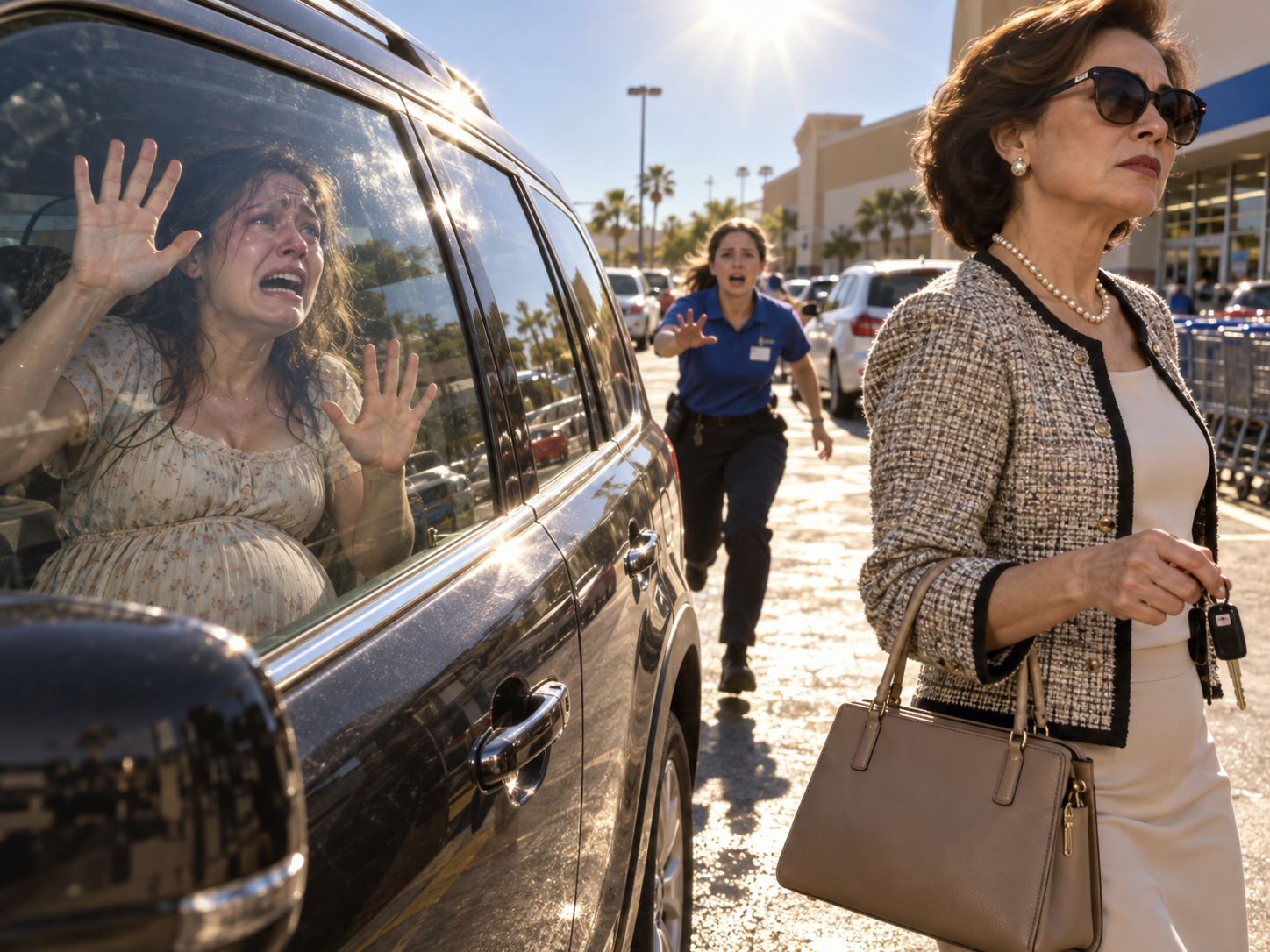
I did not call Margot.
That was the first decision I made.
The second was to photograph the message before anyone could delete it.
The third was to call Lena Ortiz.
Lena had represented my father before she represented me. She was fifty-one, allergic to panic, unimpressed by money, and one of the only people in my life who had never mistaken loyalty for obedience.
She answered on the fourth ring.
“If this is about the merger, I’m hanging up.”
“I’m in the hospital.”
A pause.
“Which one?”
“St. Catherine’s.”
“What happened?”
“Pulmonary embolism.”
The silence changed.
“When?”
“Tonight.”
“Are you stable?”
“Yes.”
“Is Margot there?”
“No.”
Another pause.
Longer.
“What do you need?”
That was why I trusted her.
No useless sympathy.
No twenty questions.
I looked at the message.
“I need every document connected to my accident.”
“You already have them.”
“I want everything.”
“Police report?”
“Yes.”
“Insurance investigation?”
“Yes.”
“Ambulance records, hospital records, imaging, operative notes, vehicle examination?”
“Yes.”
“Why?”
“Because somebody just told me not to trust them.”
Lena did not laugh.
“Who?”
“Clara Dunn.”
This time the silence lasted nearly five seconds.
“You know the name too.”
“I know enough to tell you not to discuss this over an unsecured phone.”
That sharpened my attention.
“What do you know?”
“I’ll be there at seven.”
“Lena.”
“At seven, Elias.”
She disconnected.
I stared at the phone.
Nobody in my world hung up on me casually.
Lena had earned the privilege.
A nurse came in thirty minutes later, adjusted my IV, checked my oxygen saturation, and tried to convince me to sleep.
I failed.
Every time I closed my eyes, I saw Margot’s taillights disappearing through the cemetery gates.
Then Clara kneeling in the mud.
Then Victor Ashford standing over me eighteen months earlier.
I had memories from after the crash, but they were unreliable.
Pain medication.
Shock.
Pieces.
I remembered Margot holding my hand.
I remembered Victor telling me I had suffered catastrophic trauma.
I remembered asking whether I would walk again.
His answer had been careful.
“We need to focus on survival first.”
Later, he was more certain.
The spinal damage had been immediate, he told me.
Severe.
Nothing anyone had done afterward could have changed it.
I had believed him.
Why wouldn’t I?
He was one of the most respected surgeons in Pennsylvania.
He was also the father of the woman I intended to marry.
At 4:11 a.m., another message arrived from the unknown number.
This one contained only an address.
A coffee shop three blocks from the hospital.
Below it:
Tomorrow. Noon. If you still want the truth. Come without Margot.
I typed:
Are you Clara?
No response.
I tried calling.
The number went straight to voicemail.
I did not leave a message.
At six forty-five, Lena entered my room carrying a black leather bag and an expression that usually meant somebody else was about to have a bad morning.
She kissed my forehead.
It was the closest thing she offered to panic.
“You look terrible.”
“You look expensive.”
“Hospital drugs?”
“Genetics.”
She pulled a chair beside the bed.
“Start from the cemetery.”
I told her everything.
Margot.
The argument.
The documents.
The chest pain.
Clara.
Nathan.
Victor.
The message.
Lena listened without interrupting.
When I finished, she held out her hand.
“Show me the documents Margot wanted signed.”
“They’re at the house.”
“Electronic copies?”
“In my email.”
I opened them.
Lena spent nearly ten minutes reading.
Her face gave away nothing.
That was usually a bad sign.
Finally she looked at me.
“These are broader than she described.”
“How broad?”
“She would have operational authority over Baron Harbor Holdings and BHR Logistics during any period in which you were medically unable to act.”
“I knew that part.”
“There’s also language allowing her to appoint substitute managers.”
I frowned.
“What does that mean?”
“It means if you were temporarily incapacitated, she could place people of her choosing into executive control.”
“Can she sell assets?”
“Not directly.”
“That wasn’t my question.”
“With the right board approvals, she could restructure enough that the distinction would become academic.”
I looked at the rain streaking the hospital window.
“She said it was so bills wouldn’t stop if I got sick.”
Lena glanced around the room.
“Convenient timing.”
Anger moved through me.
Cold.
Precise.
“She left me in a cemetery.”
“I heard that part.”
“She knew I was having pain.”
“Did she?”
“I told her I didn’t feel right.”
Lena’s eyes sharpened.
“That matters.”
“For what?”
“For understanding whether your fiancée is cruel, criminal, or merely catastrophically selfish. I’m not assigning categories without evidence.”
That was also why I trusted her.
“What do you know about Clara Dunn?”
Lena leaned back.
“Five years ago, Dunn was a trauma surgeon at Ashford Medical Center.”
“Victor’s hospital.”
“He wasn’t owner, but he chaired surgery and had enormous influence.”
“What happened?”
“Dunn raised concerns about altered records in several surgical cases. According to the public disciplinary file, she accessed records without authorization, violated internal protocols, and made accusations the hospital said she couldn’t substantiate.”
“And according to Clara?”
“Depends which sealed proceeding you believe.”
“Sealed?”
“Victor Ashford sued her.”
“For defamation?”
“Among other things.”
“What happened?”
“Confidential settlement. She surrendered hospital privileges during the investigation. Eventually her clinical career collapsed.”
“But Victor kept operating.”
“Yes.”
“Was she lying?”
Lena looked at me.
“I don’t know.”
“Would you tell me if you did?”
“Yes.”
I believed her.
“Find out.”
“I already started.”
A knock interrupted us.
Nathan Marsh stepped inside.
He looked at Lena.
She looked at him.
Neither seemed pleased by the existence of the other.
“I need to examine my patient.”
Lena stood.
“I need to prevent your hospital from losing documents.”
Nathan’s expression hardened.
“Then I suggest you speak to counsel.”
“I plan to.”
“Good.”
“Excellent.”
I almost smiled.
Nathan waited until Lena stepped into the hallway before turning to me.
“You called a lawyer?”
“I wake up early.”
“You need rest.”
“I’ve had eighteen months of people telling me what I need.”
He checked the monitor.
“Your oxygen numbers are improving.”
“Good.”
“You’ll remain here another day at least.”
“Fine.”
He hesitated.
I watched him.
“What aren’t you saying?”
Nathan exhaled through his nose.
“Clara Dunn called the nurses’ station.”
“When?”
“Ten minutes ago.”
I straightened.
“What did she want?”
“To ask whether you were awake.”
“And?”
“I told her yes.”
“You spoke to her?”
“For less than thirty seconds.”
“What did she say?”
Nathan looked directly at me.
“She said you would probably start asking questions today.”
“Smart woman.”
“She also said I should check the timestamp on your first neurological assessment after the accident.”
The room became very quiet.
“What timestamp?”
“That was my response.”
“And?”
“She hung up.”
I studied him.
“Did you check?”
His jaw tightened.
“I started to.”
“And?”
“There are two versions.”
I stopped breathing for a second.
Nathan continued.
“The version currently in your chart shows the first full neurological assessment occurring at 1:18 a.m.”
“What does the other show?”
“A preliminary entry at 12:41.”
“What’s in it?”
“I don’t know yet.”
“You just said there are two versions.”
“The earlier entry exists in the audit history, but its body text was overwritten.”
“By whom?”
“I’m not discussing that until compliance reviews it.”
“Nathan.”
“I mean it.”
“Was it Victor?”
He looked toward the door.
That was answer enough.
My pulse monitor began climbing.
Nathan noticed.
“Elias.”
“What happened between twelve forty-one and one eighteen?”
“I don’t know.”
“What time did I arrive at the hospital?”
“Just after midnight.”
“What time did surgery begin?”
“Your official record says 1:46.”
“Official.”
Nathan closed his eyes briefly.
“You need to stop using words like that.”
“Why?”
“Because I’m starting to dislike how accurate they sound.”
At eleven thirty, against medical advice and with Lena threatening several people on my behalf, I transferred into my chair and went downstairs.
I did not go alone.
Lena came with me.
Clara had asked that I come without Margot.
She had said nothing about lawyers.
The coffee shop sat across from a small park.
Clara occupied a table in the back.
No navy raincoat today.
She wore a gray sweater beneath a dark jacket. Her hair was down.
She looked different in daylight.
Less like a stranger emerging from a graveyard.
More tired.
She stood when she saw me.
Her eyes went immediately to Lena.
“I asked you to come alone.”
“She doesn’t count.”
Lena pulled out a chair.
“I’m delighted already.”
Clara looked at me.
“You should still be upstairs.”
“So everyone keeps telling me.”
“You almost died.”
“And yet here we are.”
Her expression tightened.
Then she sat.
I placed the muddy green glove on the table.
“You forgot this.”
She stared at it.
“I wondered where that went.”
“Your coat is upstairs.”
“Keep it.”
“I don’t need your coat.”
“You needed it last night.”
Lena looked between us.
“Can we save the wardrobe dispute until after the conspiracy?”
Clara’s gaze snapped toward her.
“I never said conspiracy.”
“No,” Lena said. “You just sent my client an anonymous message telling him not to trust the report from the event that paralyzed him.”
Clara looked at me.
“You told her.”
“I tell Lena things when I want those things to become legally irritating.”
Clara almost smiled.
Almost.
Then the expression disappeared.
“Did Marsh check the neurological assessment?”
“Yes.”
“What did he find?”
“An overwritten entry.”
Her face went still.
“So it’s still there.”
“What is?”
She looked around the café before reaching into her bag.
She removed a manila envelope.
My name was written across the front.
Inside were three photocopied pages.
The first looked like an ambulance report.
The second appeared to be a hospital intake sheet.
The third was a page from my official accident file.
Clara tapped the ambulance record.
“Read the highlighted line.”
I did.
Patient responsive. Reports severe lumbar pain. Spontaneous movement observed bilateral lower extremities.
My fingers stopped.
I read it again.
Spontaneous movement.
Both legs.
“That’s not possible.”
Clara said nothing.
I looked at her.
“I couldn’t move my legs.”
“When?”
“After surgery.”
“I’m asking before.”
Memory flashed.
Rain on broken glass.
A paramedic touching my ankle.
A voice.
Can you feel this?
I remembered saying yes.
Or thought I did.
Trauma damaged memory.
Drugs distorted it.
But something cold began moving through me.
I looked at the third page.
The official summary.
At scene: absent voluntary motor response in bilateral lower extremities.
I stared at the contradiction.
“Which one is real?”
Clara’s voice was quiet.
“The first document was copied before the electronic record was finalized.”
“By who?”
“A paramedic who kept his own case notes.”
“Why do you have it?”
“Because eighteen months ago, someone contacted me.”
“Who?”
“A former colleague.”
“Why?”
“Because Victor Ashford’s name appeared on your surgical chart.”
I leaned back.
The café noise seemed to retreat.
Clara continued.
“I spent years trying to prove Victor had a pattern. When a patient deteriorated after surgery, records changed. Timelines moved. Symptoms appeared earlier than nurses remembered seeing them. Complications became inevitable instead of preventable.”
Lena asked, “And you believe that happened to Elias?”
“I believe the records deserve examination.”
“That’s not what you texted.”
Clara looked at me.
“No.”
“What do you believe?”
Her eyes did not move from mine.
“I believe you were badly injured in the crash.”
My throat tightened.
“But?”
“I do not believe the medical record proves your paralysis was complete at the scene.”
I heard my own voice as if someone else had spoken.
“What are you saying?”
“I’m saying there may have been a period after the crash when the injury was incomplete.”
“And if there was?”
Clara took a breath.
“Then timing mattered.”
Every muscle above my waist went rigid.
“How much?”
“That depends on the exact injury.”
“How much, Clara?”
“I am not going to promise you that faster surgery would have meant you walked out of that hospital.”
“I didn’t ask for a promise.”
“Good. Because nobody can honestly give you one.”
She placed her hand on the second document.
“This preliminary hospital note recorded sensation below the level later documented in your final chart.”
My mouth went dry.
“The note Nathan found.”
“Probably.”
“Who changed it?”
“I don’t know.”
“You think Victor did.”
“I think the same pattern exists.”
I stared at the pages.
For eighteen months I had learned to live with one brutal fact.
The crash took my legs.
Maybe nobody could have stopped it.
Maybe no decision afterward mattered.
There was cruelty in that certainty.
But there was peace too.
Now Clara had placed three pieces of paper in front of me and broken it open.
I looked at her.
“Why were you at the cemetery?”
Lena glanced up.
Clara’s expression changed.
There it was.
The question she had expected.
“I was looking for you.”
My hand tightened on the paper.
“How did you know I’d be there?”
“Your father’s memorial foundation posts on the anniversary every year. I knew you visited him.”
“You followed me?”
“I went there hoping to speak to you privately.”
“Why not call?”
“I tried.”
“When?”
“Three times in the last month.”
“I never got a call.”
“I never got past your office.”
That was possible.
My staff screened hundreds of calls.
“Why now?”
“Because someone has started requesting archived copies of your accident records.”
Lena leaned forward.
“Who?”
“I don’t know.”
“You expect us to believe that?”
Clara looked at her.
“I expect nothing from either of you.”
Then she looked at me.
“But I thought if Victor Ashford was cleaning the file again, you deserved to know there was something in it worth cleaning.”
My mind went immediately to Margot’s documents.
Broader authority.
Two holding companies.
Medical incapacity language.
She had wanted my signature yesterday.
Clara had noticed archived files being requested recently.
Coincidence.
Maybe.
I no longer believed in convenient coincidences.
“Did Margot know you were there?”
Clara shook her head.
“I’ve never spoken to her.”
“Has Victor contacted you?”
“Not for five years.”
“Does he know you have these?”
“I hope not.”
Something in her voice made me look closer.
Fear.
Not dramatic fear.
Experienced fear.
The kind acquired honestly.
I slid the documents back into the envelope.
“You saved my life last night.”
“That doesn’t make me right about this.”
“I know.”
Her expression softened by a degree.
Good.
She understood.
Gratitude was not evidence.
Pain was not evidence.
Betrayal was not evidence.
I had built an empire because I understood the difference between suspicion and proof.
I handed the envelope to Lena.
“Verify every page.”
Clara nodded.
“That’s exactly what you should do.”
I turned my chair toward the exit.
“Elias.”
I stopped.
Clara’s eyes held mine.
“There’s one more thing.”
“What?”
“The official report says you had no lower-body response from the moment first responders reached you.”
“Yes.”
She swallowed.
“The paramedic who wrote the original note remembered you.”
“Why?”
“Because you grabbed his sleeve before they put you in the ambulance.”
A strange pressure formed behind my ribs.
“What did I say?”
Clara hesitated.
“You asked him why they were taking you to Ashford.”
The café disappeared around me.
I remembered headlights.
Sirens.
A voice telling me which hospital.
And myself trying to say something.
No.
Not there.
Take me to St. Catherine’s.
I had forgotten.
Or somebody had convinced me it never mattered.
I looked at Clara.
“Who decided where I went?”
She answered quietly.
“According to the ambulance record?”
I already knew.
“Margot.”