I stayed with Nora for five days.
Margaret moved back to her condo the first morning.
Daniel sent me a photograph of her suitcases gone from the guest room.
I hated that he thought proof was necessary.
I hated even more that part of me was relieved to see it.
During those five days, Daniel did almost everything right.
He did not pressure me to return.
He did not bring Margaret to Nora's apartment.
He did not ask friends to contact me.
He sent one message in the morning and one at night.
**I love you. I’m here when you’re ready.**
No excuses.
No demands.
No “Mom is sorry.”
No “We both said things.”
At first, his restraint softened me.
Then I realized something uncomfortable.
Daniel had always been good at behaving once the consequences were clear.
The problem was what happened before.
When there was still a choice.
On the sixth day, I went home.
Not because I had forgiven him.
Because I needed to see whether I still felt like I belonged there.
Daniel was in the kitchen when I entered.
He stood so quickly his chair scraped the floor.
“Hi.”
“Hi.”
The house looked different without Margaret's things.
Her cardigan was gone from the back of the dining chair.
Her vitamins were gone from the counter.
Her perfume no longer lingered near the guest bathroom.
There was an emptiness I should have found comforting.
Instead I felt suspicious of it.
Daniel watched me put down my purse.
“I changed the locks.”
I looked at him.
He nodded toward the door.
“She gave me the key back, but I changed them anyway.”
“Why?”
“Because I should’ve done it years ago.”
That surprised me.
He took a breath.
“I called a therapist.”
I said nothing.
“For me. Not for us. I mean, maybe for us later if you want. But I called for me.”
“Why?”
“Because I don’t know why I did what I did.”
“Yes, you do.”
He flinched.
I continued.
“You were afraid of upsetting her.”
“I know that part.”
“Then what don’t you know?”
“Why I’m still afraid.”
That silenced me.
Daniel sat slowly.
“My mother used to stop speaking to me.”
I frowned.
“What?”
“When I was a kid. If I disappointed her.”
I had heard pieces of Daniel's childhood before.
His father left when he was nine.
Margaret raised him alone.
Daniel always described her as devoted, exhausted, strong.
He had never described this.
“How long?”
“Sometimes hours. Sometimes days.”
I pulled out the chair across from him.
He stared at his hands.
“If I got a bad grade or talked back or wanted to spend a holiday with Dad, she’d go quiet. Completely quiet. She’d cook for me. Drive me places. Do laundry. But she wouldn’t speak.”
“That’s cruel.”
“She said she needed time to calm down.”
“Daniel.”
“I know.”
He rubbed his face.
“At the time, I thought that was normal. Eventually I learned if I apologized enough, she’d come back.”
The words hurt because I could see the child inside them.
A boy learning that disagreement meant abandonment.
A boy discovering safety in surrender.
A boy who grew into a man still saying please when his mother hurt his wife.
I wanted to reach across the table.
I didn’t.
Understanding was not the same as absolution.
“What happened after I left?” I asked.
His jaw tightened.
“She blamed you.”
“Of course.”
“She said you provoked her. She said you were going to use it against her. She said if I made her leave, it proved you’d turned me against her.”
“And what did you say?”
He looked directly at me.
“I told her to pack.”
I waited.
“That’s it?”
“No.”
He swallowed.
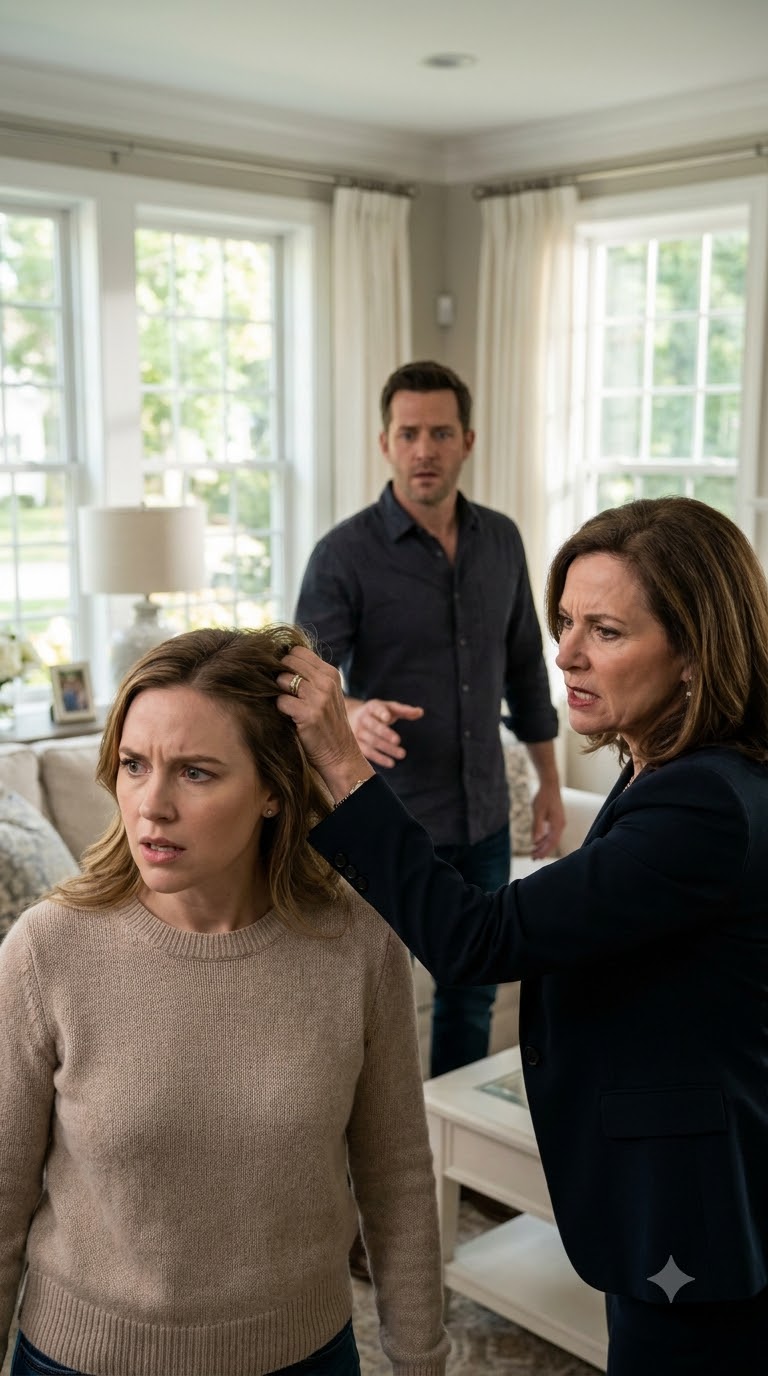
“I told her she assaulted my wife.”
The word hung between us.
Assaulted.
It sounded ugly.
Because it was.
“And?”
“She slapped me.”
I froze.
“What?”
“It wasn’t hard.”
My chair scraped backward as I stood.
“That is not the point.”
“I know.”
“Why didn’t you tell me?”
“Because I didn’t want you to feel responsible.”
“I’m not responsible.”
“I know.”
“Do you?”
He looked down.
A red mark would have faded by now.
There was nothing visible on his face.
But suddenly I understood why his messages had changed after the first night.
No more defending her.
No more asking me to understand.
Margaret had finally given Daniel a fraction of what I had been asking him to see.
Not because he believed me only after she hurt him.
I didn’t think that.
But because people raised inside a system often don’t recognize its walls until one falls on them.
“What did you do?” I asked.
“I told her to leave.”
“And she did?”
“Eventually.”
I sat again.
Daniel's eyes were wet.
“She cried. She said I was abandoning her. She said Dad left and now I was leaving too. She asked whether I was really going to throw away my mother for a woman who might divorce me anyway.”
I closed my eyes.
“That sounds like her.”
“I told her you weren’t making me choose.”
I looked at him.
He nodded.