The end of an engagement is quieter than people imagine.
There was no dramatic music.
No final speech on a rainy street.
No moment where I stopped loving Vanessa simply because loving her had become impossible.
There were phone calls.
Boxes.
Canceled reservations.
Deposits we did not get back.
Her clothes folded into suitcases.
A wedding website I stared at for twenty minutes before deleting.
A florist who kept apologizing even though she had done nothing wrong.
And there was the ring.
I took it off three days later.
Until then, I kept waking with my thumb rubbing over it automatically.
Vanessa called eleven times the first day.
Four the second.
Once the third.
Then she stopped.
Her final voicemail was not angry.
That made it harder.
She said she had been scared.
She said she had felt like an outsider in my family.
She said she had convinced herself that if Eleanor legally included her, then she would finally be secure.
She said the soup had been an accident.
She said blaming Grace had been panic.
She admitted unplugging the camera.
She admitted moving the earring and letter opener.
She said she had not intended to endanger my mother's health.
She insisted she had never touched Eleanor's medication.
That part, I believed.
Because my mother had moved the pill herself.
Vanessa admitted locking Grace in the laundry room.
She described it as “keeping things from escalating.”
Grace described it differently.
I trusted Grace.
That sentence took me longer to say than it should have.
Not because Grace needed my trust.
Because I had failed hers.
One week after Vanessa left, I found Grace in the kitchen chopping celery.
Her burn was healing.
The skin remained pink and tender.
I stood beside the counter.
“Grace.”
She continued chopping.
“Yes?”
“I owe you an apology.”
“You already apologized.”
“Not properly.”
The knife stopped.
I took a breath.
“When I walked into Mom's room that day, you told me what happened.”
Grace looked down.
“And I looked at Vanessa before I looked at you.”
She said nothing.
“I wanted her story to be true because believing yours would have cost me more.”
Grace finally looked at me.
“That is human.”
“It wasn't fair.”
“No.”
“I should have done better.”
“Yes.”
I almost smiled.
Grace had never been sentimental.
“I don't expect you to forgive me because I said sorry.”
“I know.”
“And I understand if you don't want to work here anymore.”
At that, she frowned.
“Who will cook for your mother?”
“I can cook.”
Grace stared at me.
We both knew that was not a serious answer.
She went back to the celery.
“Then I suppose I must stay.”
My eyes burned.
“Thank you.”
“Do not cry near the onions.”
“These are celery.”
“Exactly. It would be embarrassing.”
I laughed.
The sound surprised me.
From the doorway, my mother said, “Is lunch almost ready?”
Grace and I turned.
Eleanor stood without the walker.
Grace raised one eyebrow.
“If you have enough strength to criticize the schedule, you have enough strength to set the table.”
My mother's mouth opened.
I waited.
Then Eleanor smiled.
“Yes, ma'am.”
Watching them together was strange.
The hot soup had changed something between them.
Or perhaps revealed it.
Grace never treated Eleanor as fragile again.
Eleanor never allowed Grace to call her Mrs. Bennett again.
“Eleanor,” she insisted.
Grace resisted for two days.
Then gave up.
My relationship with my mother took longer to repair.
I was furious.
Not about Vanessa.
About the deception.
“You should have trusted me,” I told her repeatedly.
“I know.”
“You made me think you were weaker than you were.”
“I was still weak.”
“You know what I mean.”
“Yes.”
“You let me think your mind was foggy.”
“I never said it was.”
“You encouraged the impression.”
“Yes.”
“That was manipulative.”
“Yes.”
It was difficult to fight with someone who refused to defend the indefensible.
One evening, two weeks after Vanessa left, Mom and I sat on the back porch.
September had begun cooling the air.
She wore a sweater.
I brought tea.
For several minutes neither of us spoke.
Then she said, “I was afraid.”
I looked at her.
My mother rarely said those words.
Not because she did not feel fear.
Because she believed naming it gave it too much importance.
“Of Vanessa?”
“Of being wrong.”
I waited.
“If I told you I suspected the woman you intended to marry, and I was wrong, I could damage your happiness permanently.”
“You damaged it anyway.”
“Yes.”
“At least we agree.”
She smiled faintly.
“But I was also afraid of being right.”
I looked into my tea.
“You were.”
“Yes.”
“Did you hate her?”
“No.”
That answer surprised me.
“Not even at the end?”
My mother considered it.
“I hated what she did to Grace.”
“Same.”
“I hated what she did to you.”
I swallowed.
“But I don't think Vanessa woke one morning and decided to become cruel.”
I looked at her.
“Are you defending her now?”
“No.”
“Because you're very good at that.”
“Adrienne.”
I sighed.
She continued.
“I think insecurity became entitlement. Then entitlement became justification. She told herself she deserved reassurance. Then she told herself she deserved protection. Eventually, she decided she deserved control.”
I thought of Vanessa's voicemail.
I wanted security.
“I loved her,” I said.
“I know.”
“Part of me still does.”
“I know.”
“I hate that.”
“Don't.”
I looked at her.
“You do not need to rewrite every good memory into a lie simply because the ending was terrible.”
That almost broke me.
“So what do I do with them?”
“Keep them where they belong.”
“Where?”
“In the past.”
We sat quietly.
After a while I said, “Why did you tell me Vanessa wouldn't hurt anyone?”
Mom closed her eyes.
“I knew you would remember it.”
“You could've said something less convincing.”
“I needed Vanessa convinced.”
“You were convincing.”
“Yes.”
“Grace looked devastated.”
“I know.”
“You owe her more than an apology.”
“I gave her a raise.”
I stared at her.
“Mom.”
“A significant raise.”
I laughed despite myself.
Then the laugh disappeared.
“You really wanted to see how far Vanessa would go.”
“Yes.”
“And what if she had stopped?”
My mother looked toward the garden.
“If she had returned the documents, apologized to Grace, told you the truth, and walked away from the amendment…”
“You would've forgiven her?”
“That wasn't my decision.”
“Would you have wanted me to?”
Another pause.
“I would have given you the facts.”
“And let me decide.”
“Yes.”
I raised an eyebrow.
“Eventually.”
She smiled.
“Eventually.”
I looked at my mother for a long time.
This impossible woman.
Stubborn.
Manipulative.
Protective.
Terrifyingly observant.
Alive.
That mattered most.
Three months later, Eleanor completed cardiac rehabilitation.
On her final supervised treadmill session, she insisted I film her.
“You're walking three miles an hour,” I said.
“History must preserve greatness accurately.”
“You're impossible.”
“Record.”
I recorded.
Grace stood beside me laughing.
My mother walked.
Not quickly.
Not effortlessly.
But steadily.
That evening we ate tomato soup.
Grace chose the menu.
I accused her of having a dark sense of humor.
“I have no idea what you mean,” she said.
Mother nearly choked laughing.
We ate at the kitchen table instead of upstairs.
No trays.
No closed bedroom doors.
No hidden documents.
No unplugged cameras.
Just three women in a house that had survived something ugly.
Halfway through dinner, I noticed Eleanor watching me.
“What?”
She smiled.
“Nothing.”
“Mom.”
“I was thinking.”
“That is always dangerous.”
Grace nodded.
“Very.”
Mom ignored her.
“I was thinking that truth is rarely the thing that destroys a life.”
I frowned.
“What does?”
“The effort people make to avoid it.”
I looked down at my soup.
For months I had thought the worst moment of my life was opening that bedroom door and seeing Grace on the floor.
Later I thought it was discovering Vanessa's documents.
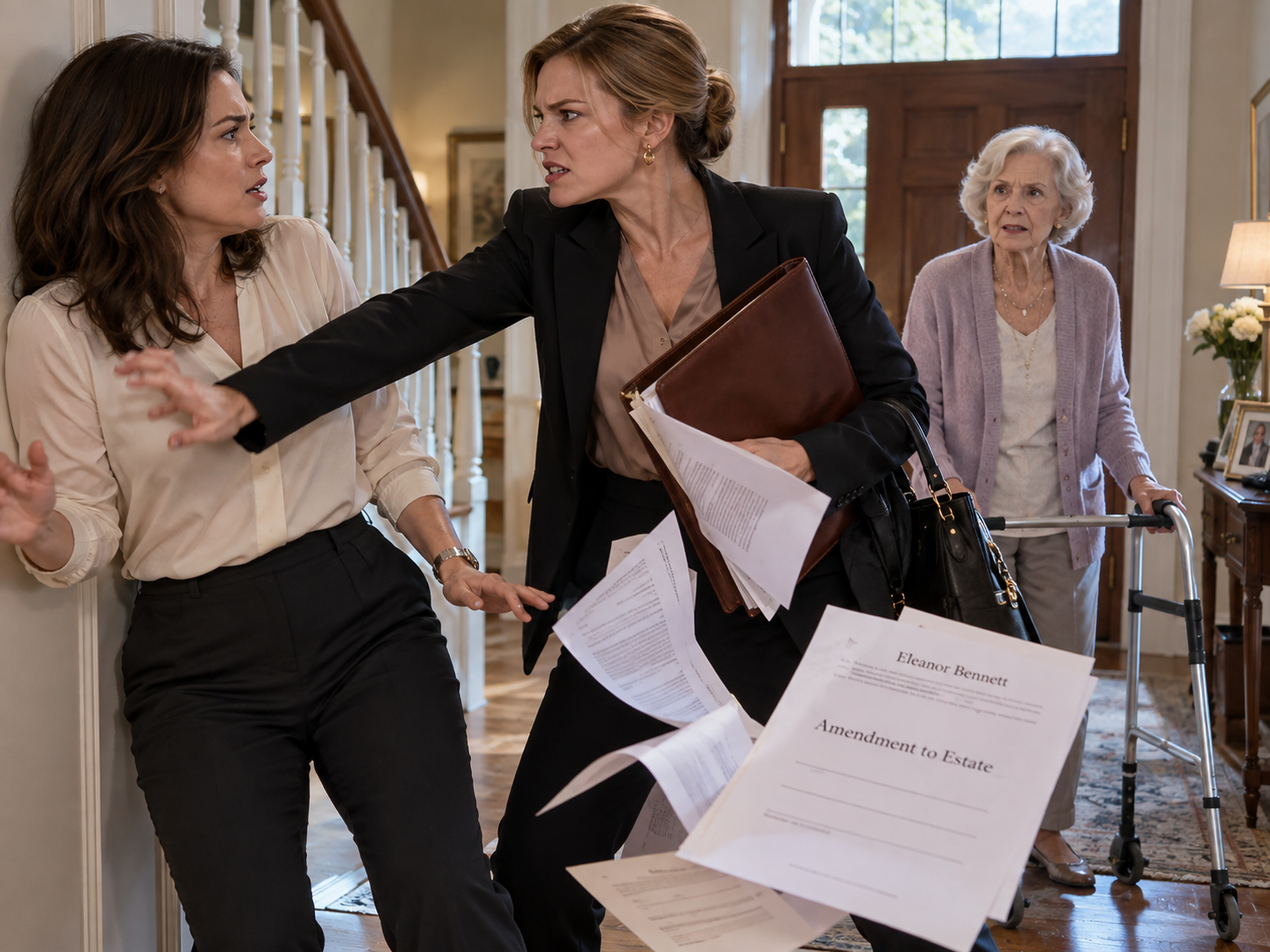
Then I thought it was watching the woman I intended to marry shove me in my mother's hallway.
But I was wrong.
The worst moment had been smaller.
Quieter.
It was the moment Grace told me the truth and I hesitated because the lie hurt less.
That was the part I carried with me.
Not as punishment.
As instruction.
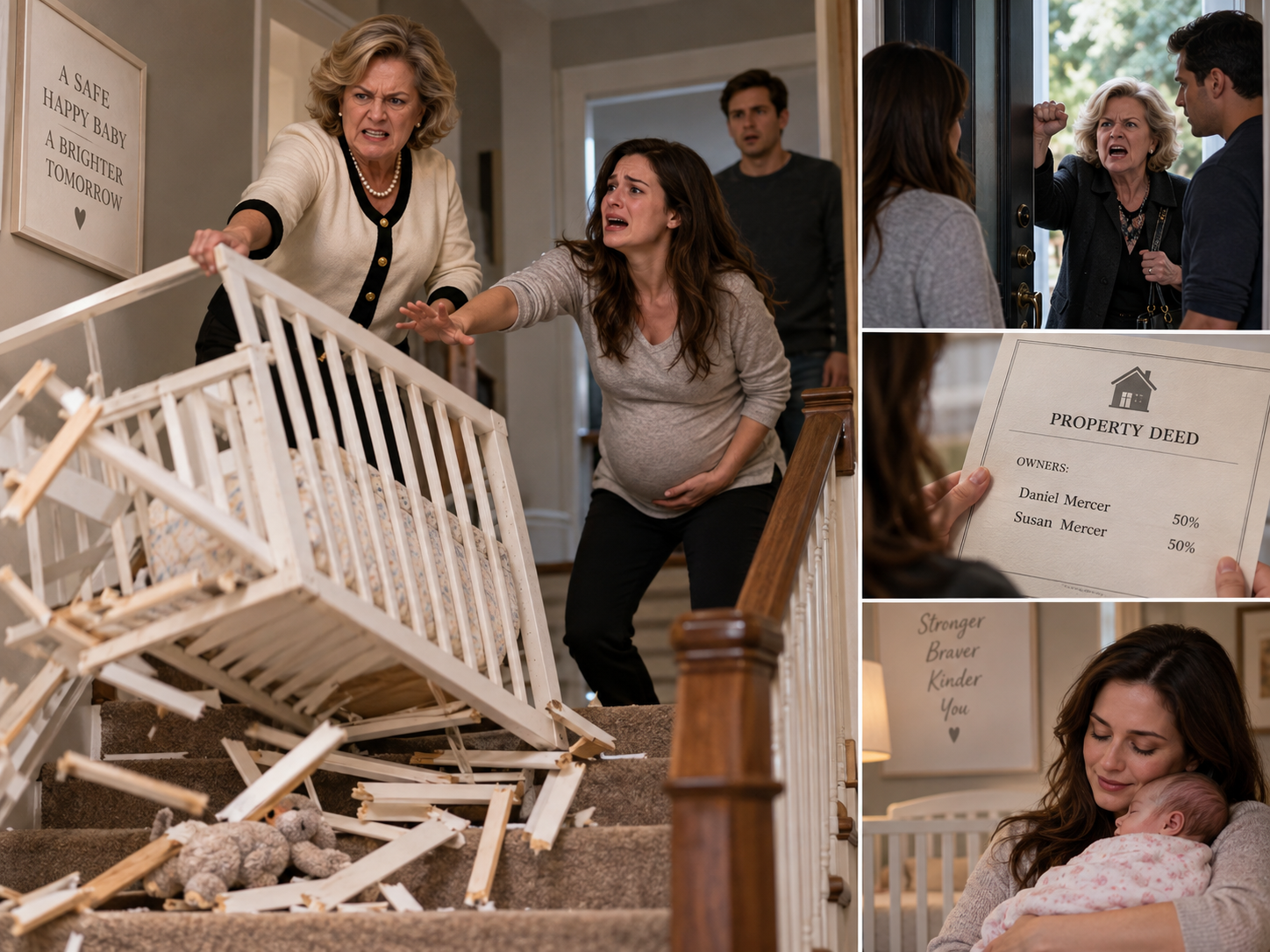
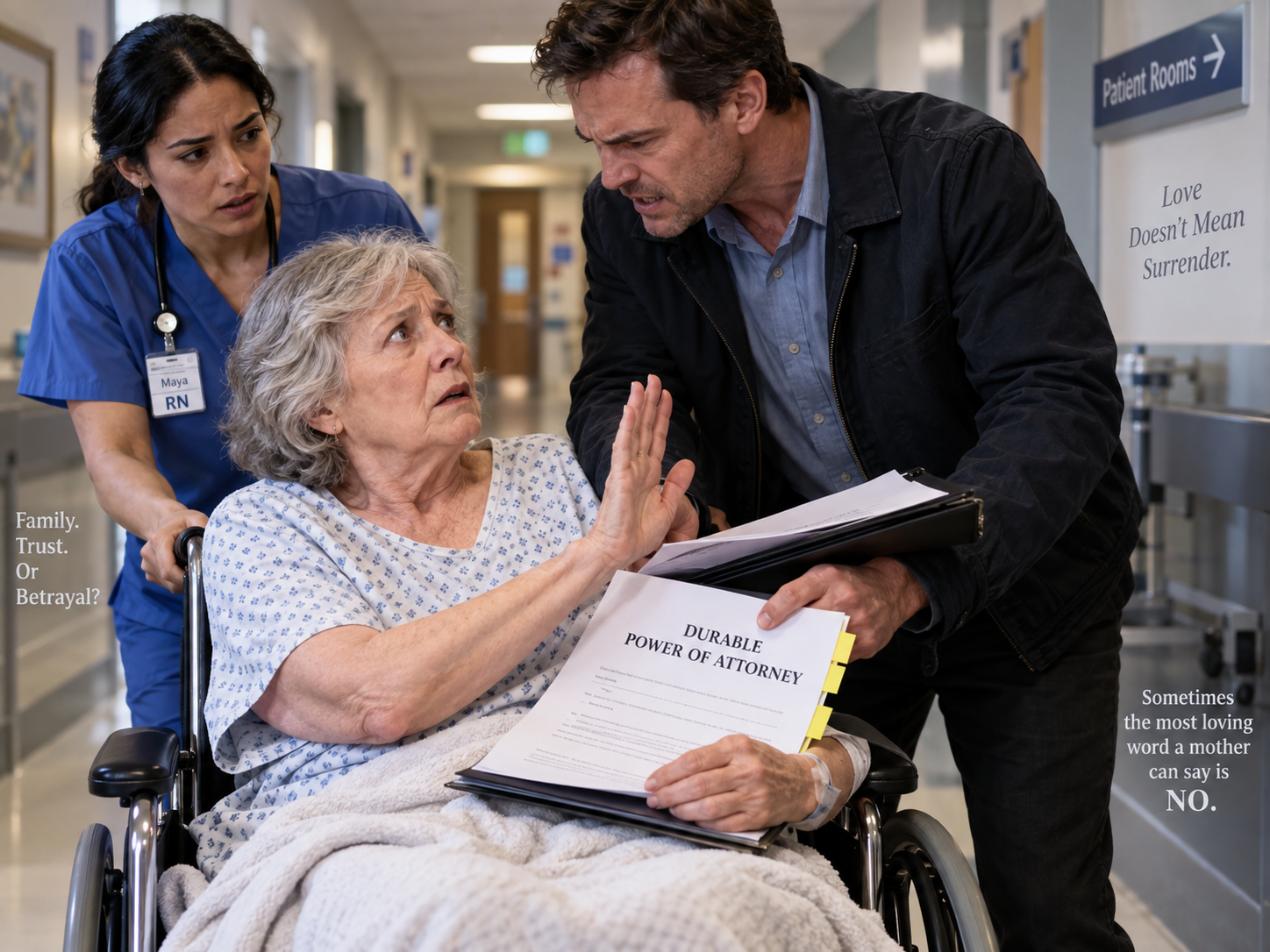
People imagine betrayal announces itself dramatically.
Sometimes it does.
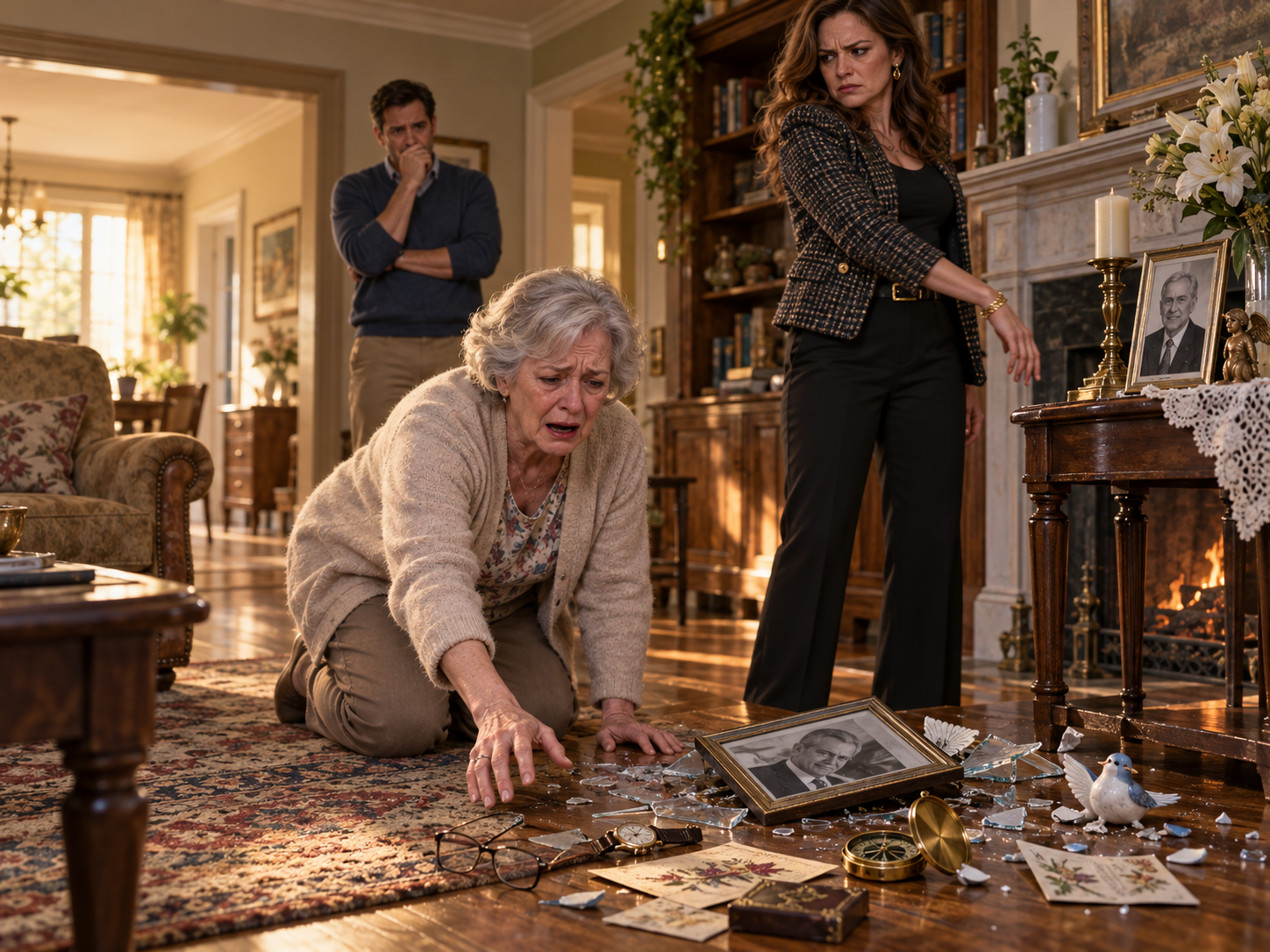
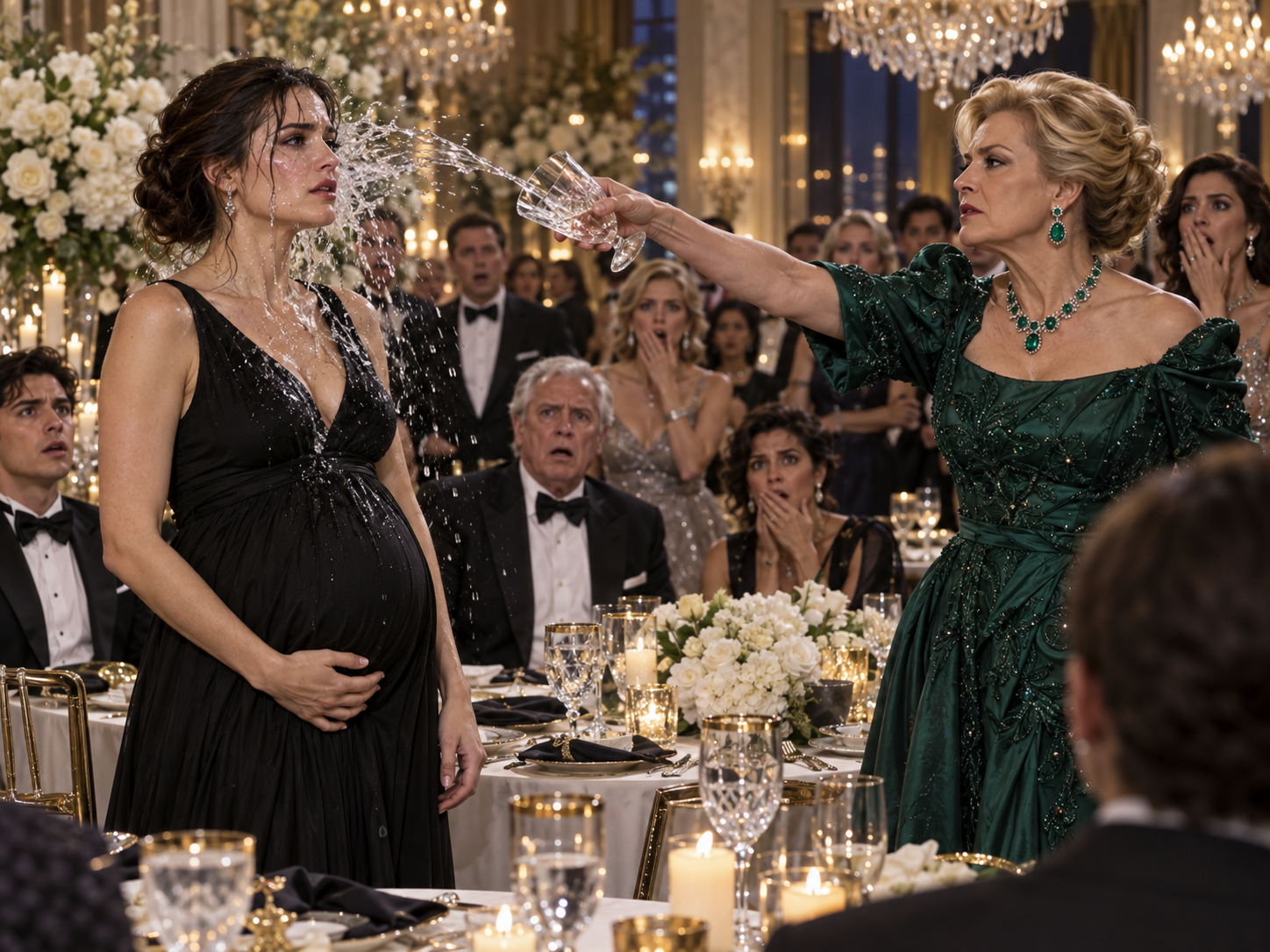
Sometimes it comes with screams and shattered dishes and hot soup across someone's skin.
But sometimes betrayal enters softly.
It moves one object.
Then another.
It unplugs one camera.
It changes one story.
It asks one frightened person to doubt another.
It tells you that love requires you to stop asking questions.
And if you are not careful, you help it.
I almost did.
My mother almost paid for it.
Grace did pay for it.
That scar remained on her arm long after the bandage came off.
One afternoon, months later, I caught her rubbing it.
“Still hurt?”
“No.”
She looked at the faint mark.
“Just reminds me.”
“Of Vanessa?”
Grace shook her head.
“Of fire.”
I understood.
Fire did not always destroy everything.
Sometimes it revealed which parts of a structure had already been weakened.
Vanessa did not create every fracture in our family.
My mother's secrecy had been one.
My reluctance to confront conflict had been another.
Vanessa found those weaknesses.
Then she used them.
What she never understood was that weakness and helplessness were not the same thing.
She looked at my seventy-one-year-old mother recovering from heart surgery and saw someone easy to pressure.
She looked at Grace and saw someone whose job made her disposable.
She looked at me and saw someone whose love could be used as a blindfold.
She was wrong about all three of us.
Grace survived being blamed.
I survived losing the future I thought I had.
And Eleanor—
Eleanor had been watching from the beginning.
Not perfectly.
Not without making mistakes.
But awake.
Alert.
Waiting.
The last time Vanessa ever contacted me was six months later.
One message.
I almost deleted it without reading.
Instead, I opened it.
I hope Eleanor is well.
That was all.
I stared at the screen.
Then I walked into the garden.
Mom was kneeling beside a rosebush, wearing gardening gloves despite being repeatedly told not to overexert herself.
“You're not supposed to lift those pots,” I said.
“I am not lifting them.”
“You moved three.”
“Circumstantial evidence.”
I laughed.
She looked up.
“What?”
“Vanessa texted.”
Her smile disappeared.
“What did she say?”
“She hopes you're well.”
Mom sat back on her heels.
“And what did you say?”
“Nothing.”
She studied me.
“You okay?”
I thought about it.
The strange thing was, I was.
Not untouched.
Not unchanged.
But okay.
“Yes.”
I slipped the phone into my pocket.
Then I pointed at the largest ceramic planter.
“You're still not moving that.”
My mother sighed dramatically.
“Grace has made you authoritarian.”
“She says you need supervision.”
“Grace is a tyrant.”
From the kitchen window, Grace shouted, “I can hear you.”
Mom called back, “Good.”
I laughed so hard I had to lean against the porch railing.
And while they argued across the garden, I looked at the two women Vanessa had once believed she could divide.
That was her greatest mistake.
Not the documents.
Not the camera.
Not even the lie about the soup.
Her greatest mistake was assuming that silence meant weakness.
Grace's silence had been restraint.
My mother's silence had been observation.
And mine—
Mine had finally ended.
I had learned to ask the next question.
To look again.
To trust evidence over comfort.
To understand that love without truth was not safety.
It was only a prettier room to be trapped inside.
My mother stood and brushed dirt from her knees.
She looked strong.
Not because she had never been weak.
Because she had survived weakness without surrendering herself to it.
“Tea?” she asked.
“In a minute.”
She headed inside.
Grace disappeared from the kitchen window.
I stayed outside for another moment.
Sunlight moved through the branches above the yard.
For the first time in a long time, I did not feel the need to check a camera.
I did not need to listen for footsteps.
I did not wonder what was missing.
Nothing was missing.
Not anymore.
And the truth, expensive as my mother had warned me it would be, had finally been paid for in full.